An interactive fiction game where you play Sherlock Holmes, solving cases by exchanging letters with a hapless police chief. I wrote all the mysteries, designed how the story reaches the player, and did the web design.
In most mystery games it quickly becomes obvious when you're chasing the wrong lead. We wanted a sandbox instead: you can ask the chief anything, and a large language model plays him, working from the mysteries I wrote. He can be wrong or miss things, so players have to think critically about everything he tells them. The character portraits are AI-generated placeholders; the mysteries and letters are mine.
Skills
- Collaboration
- Git
- Illustrator / Inkscape
How I used Narrative design on Inkvestigations
Designing how story, theme and message reach the player through gameplay and how mechanics show and reinforce narrative.
Research and narrative design for Forced Farewell →
In Forced Farewell, a boy has been kidnapped and time is of the essence. In-world communication between the chief and the player isn't instant. Due to the urgency, they're sending telegraphs back and forth, instead of the regular letters, but time is still passing. I wanted to show the time pressure the characters are under with various ominous messages sent by the kidnappers. Since we had implemented the hints system where you'd get helpful messages from the chief every so often, I decided to use them to create the narrative and time pressure.
For example, soon after taking up the case this message is sent along the usual answer:
"Dear Mr. Holmes,
I'm sending you an urgent telegram. We have received a puzzling message in our mailbox today. Unfortunately there are neither sender's nor destination address on it. No postmark to be found. The same style of cutout newspapers has been used to communicate the message.
It simply reads: "The new address for the money is 221B Baker Street."
I may sound reckless in asking your continued support, even though this appears to be a clear message saying the thieves know of your involvement, and possibly a threat to your person. I will ask your local force for two constables to stand guard at your place. It might be a prank, but we must be careful.
Yours,
Constable Wellington"This one is ambiguous, the next one carries a subtle clue, and the final one is basically directly revealing what happened, but the player (hopefully) gets the satisfaction of revealing it to everyone.
6 Feb 2024
How we designed mechanics to support the narrative →
Mystery is everywhere, but detective fiction most definitely is a genre. So how do you communicate that vibe through a game?
One trait that is manifested to the mega in detectives is perception. Their observational skills are what separate them from us Joes. This was where our game could shine: wherever a player chose to look, there something would be--even if I hadn't thought of it beforehand. Now, it was on the player to separate the chaff from grain and truly become Sherlock.
19 Jan 2024
How we designed mechanics to support the narrative →
Detectives are also usually very, very smart. The issue is that not every player is a gigabrained Sherlock. The simplest way to make someone feel smart is to make everyone else be really, really stupid.
In our world, thick police chiefs are thick on the ground. He literally cannot do anything without being told explicitly. Sometimes this can be frustrating, because we are tricked by the way he communicates and assume there's at least a shred of common sense. Rarely.
19 Jan 2024
How we designed mechanics to support the narrative →
The most important moment of the fantasy is solving the case to the shock of those around you. The game had turned out to be pretty difficult because, as it turns out, the game requires us Joes to have a detective's exceptional observational skills. So we introduced a support mechanic that increasingly nudged players towards the solution (e.g. the chief stumbles onto a clue). It was crucial that the hints felt organic and not patronizing.
Still, it was difficult, so we compromised by letting any right answer clear a story, so even a guess with mostly wrong explanations still succeeded. Yet we needed a way to reward those players who actually figure out the completely right solution.
We created a 3 star rating system. An accusation consists of the murderer, only this has to be correct, and in isolation it results in 1 star. Additionally a player can provide motive, opportunity and evidence. The more accurate information they provide the higher their score.
19 Jan 2024
How I used Writing on Inkvestigations
Coming up with stories and the words players read: prose, dialogue, descriptions.
Research and narrative design for Forced Farewell →
In Forced Farewell, a boy has been kidnapped and time is of the essence. In-world communication between the chief and the player isn't instant. Due to the urgency, they're sending telegraphs back and forth, instead of the regular letters, but time is still passing. I wanted to show the time pressure the characters are under with various ominous messages sent by the kidnappers. Since we had implemented the hints system where you'd get helpful messages from the chief every so often, I decided to use them to create the narrative and time pressure.
For example, soon after taking up the case this message is sent along the usual answer:
"Dear Mr. Holmes,
I'm sending you an urgent telegram. We have received a puzzling message in our mailbox today. Unfortunately there are neither sender's nor destination address on it. No postmark to be found. The same style of cutout newspapers has been used to communicate the message.
It simply reads: "The new address for the money is 221B Baker Street."
I may sound reckless in asking your continued support, even though this appears to be a clear message saying the thieves know of your involvement, and possibly a threat to your person. I will ask your local force for two constables to stand guard at your place. It might be a prank, but we must be careful.
Yours,
Constable Wellington"This one is ambiguous, the next one carries a subtle clue, and the final one is basically directly revealing what happened, but the player (hopefully) gets the satisfaction of revealing it to everyone.
6 Feb 2024
How I used Gameplay design on Inkvestigations
Designing what the player does from moment to moment: mechanics, the core loop, choices, risk and reward.
How we designed mechanics to support the narrative →
The most important moment of the fantasy is solving the case to the shock of those around you. The game had turned out to be pretty difficult because, as it turns out, the game requires us Joes to have a detective's exceptional observational skills. So we introduced a support mechanic that increasingly nudged players towards the solution (e.g. the chief stumbles onto a clue). It was crucial that the hints felt organic and not patronizing.
Still, it was difficult, so we compromised by letting any right answer clear a story, so even a guess with mostly wrong explanations still succeeded. Yet we needed a way to reward those players who actually figure out the completely right solution.
We created a 3 star rating system. An accusation consists of the murderer, only this has to be correct, and in isolation it results in 1 star. Additionally a player can provide motive, opportunity and evidence. The more accurate information they provide the higher their score.
19 Jan 2024
How I used Research on Inkvestigations
Studying games, design literature, or subject matter to inform my designs.
Research and narrative design for Forced Farewell →
Full spoilers ahead for Forced Farewell.
I had the outline of what would happen, but not when and where. It was an abduction story with the twist that the kid simply ran away because he hated his family but staged a crime to buy time. So far so good, but this is a story that could happen anywhere any time.I chose the time in which the original Sherlock Holmes was set, but specifically 1889 because that's at the tail end of the decade where steam boats...picked up steam. That meant fares to America were lower and accessible and a renegade kid might get on board. Because the story required parents who had the means to be ransomed as well as a kid who would need to conceive of such an idea, I chose a landed family.
Now I had who and when, which drastically narrowed down the where. I simply researched where the cheapest fares for ships going to America were at that time. Then looked to the outskirts of those great ports to find where a noble family might live. I ended up around Romsey, in spitting distance of Southampton which had become the dominant port at the time.
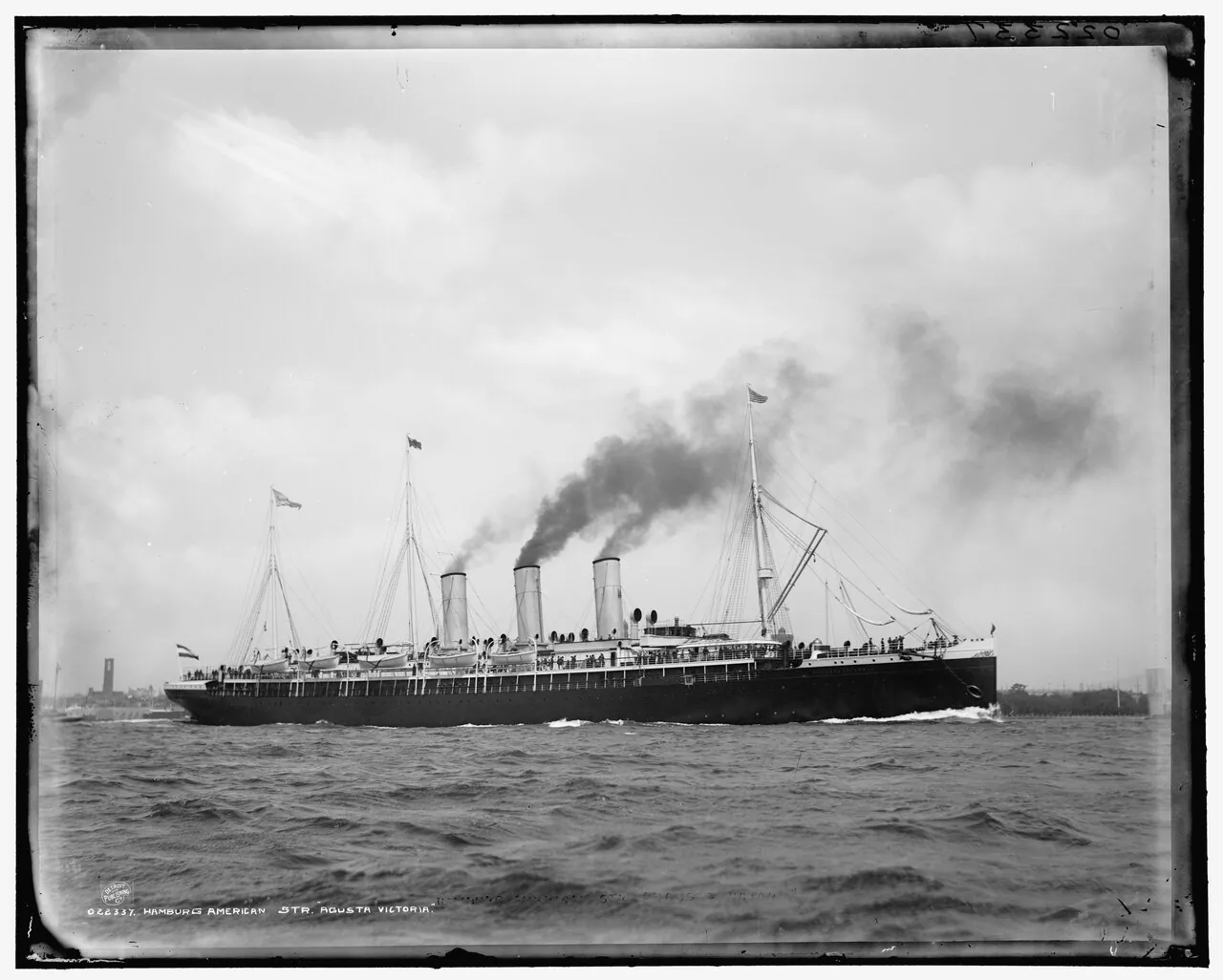
With the major constraints now set, I looked at mansions where these lords lived and reasoned about how a kid might run away since they were usually in the middle of nowhere. What would he know, what would he pack, where would he go? And how could you figure it out and find him?
6 Feb 2024
How we designed mechanics to support the narrative →
Apart from watching 600 episodes of Case Closed as a child, and watching the odd mystery movie, I was by no means a mystery expert. So I started seriously diving into the genre across all media (books, movies, shows, anime, podcasts, etc), while also reading breakdowns of the genre, such as the CliffsNotes on Detective in Fiction (I like to start small).
I wanted to really understand what made those stories so popular. My conclusion is that mystery is less a genre and more of a device for engagement. We humans experience something called the curiosity gap, a discomfort that motivates us to close the gap between what we know and what we want to know. All great stories will make us ask a question often: why? what? how? And these single-word questions can enthrall us for several hours.
In contrast to that grandeur, our stories have to ask questions that seem immediate and solvable. A man has died. There were four people present. Some really didn't like him. Who did it? Go. Because a player can ask the chief anything, it is all the more important to limit the scenarios' in scope.
19 Jan 2024
How I used Graphic design on Inkvestigations
Laying out information so it reads at a glance using hierarchy, contrast, and gestalt principles.
I decided to rework the page. Created the wireframes in Penpot to reflect some things I've learned and to make it look nicer.
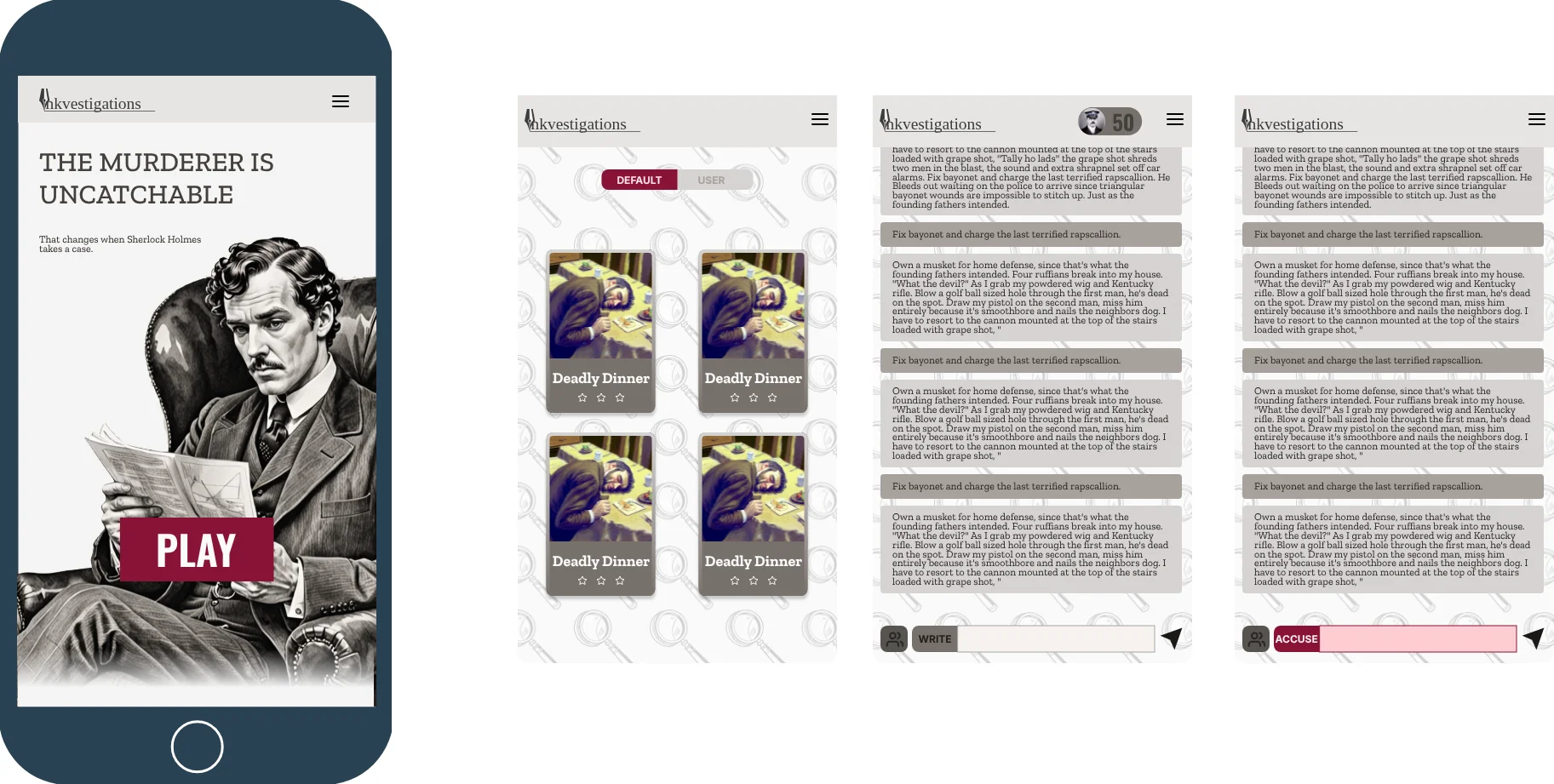
I think a black and white look with the burgundy drawing attention looks cleaner than the muddy colors we currently have.
19 Aug 2024
Devlogs & articles
- Web design rework19 Aug 2024
A quick showcase of the upcoming web design.
- Research and narrative design for Forced Farewell6 Feb 2024
I spent a long time researching the nitty gritty to try and make the story believable. I narrowed down the period and geography for the story based on that, as well as using the mechanics to deliver additional narrative.
- How we designed mechanics to support the narrative19 Jan 2024
We tried to sell the fantasy of being a detective, but first I had to research what that meant, and then use narrative design to drive it home.