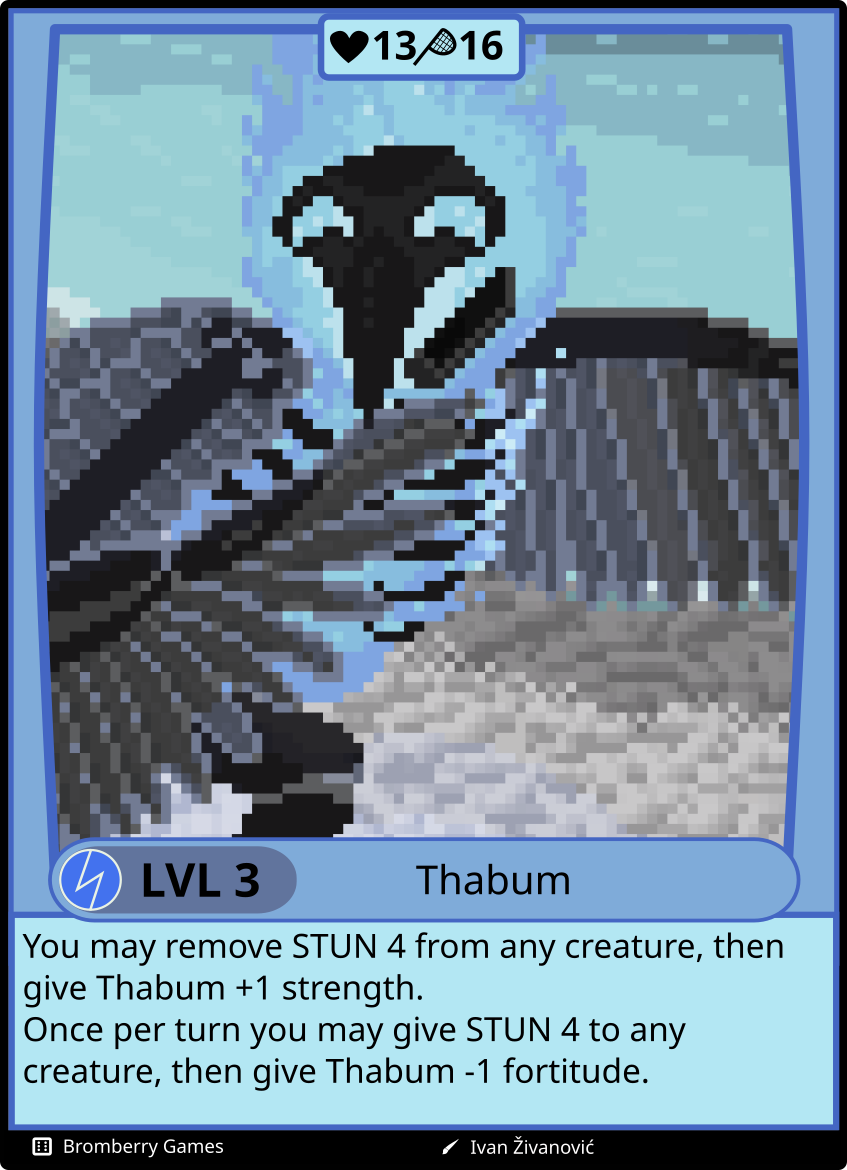
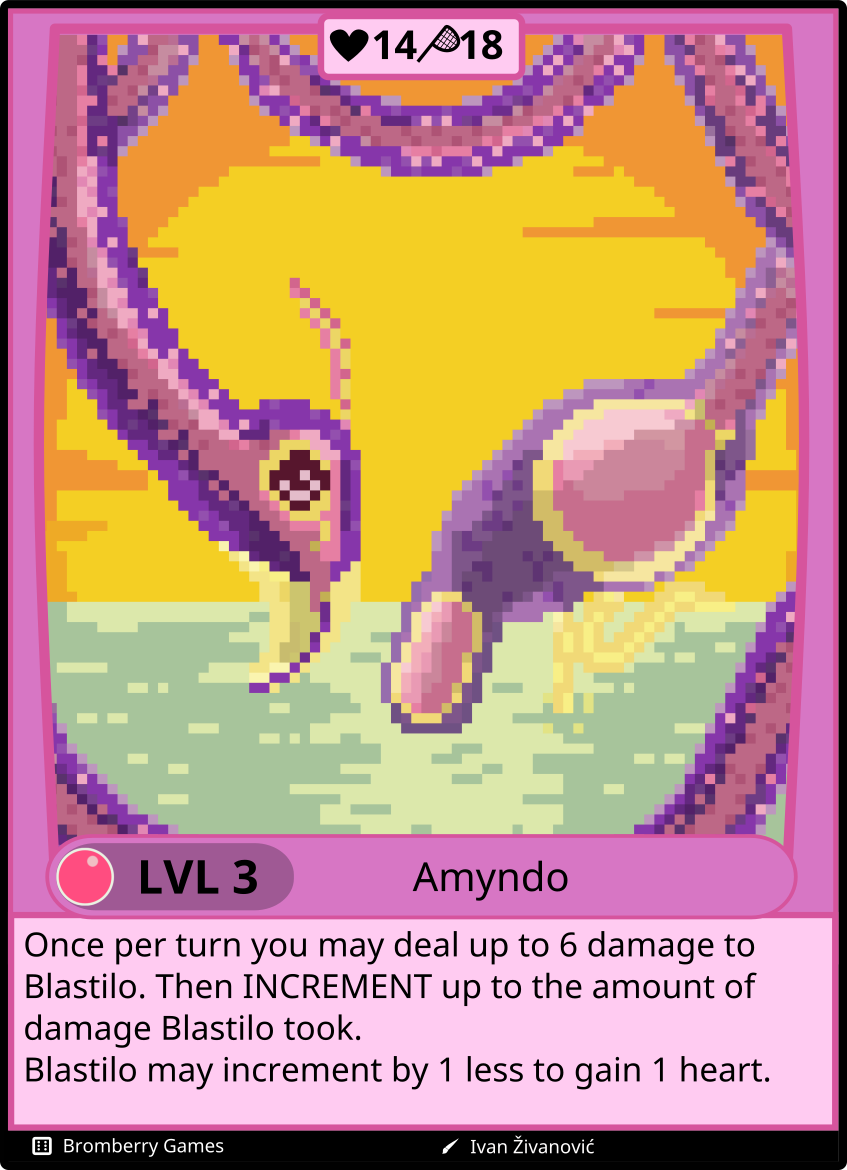
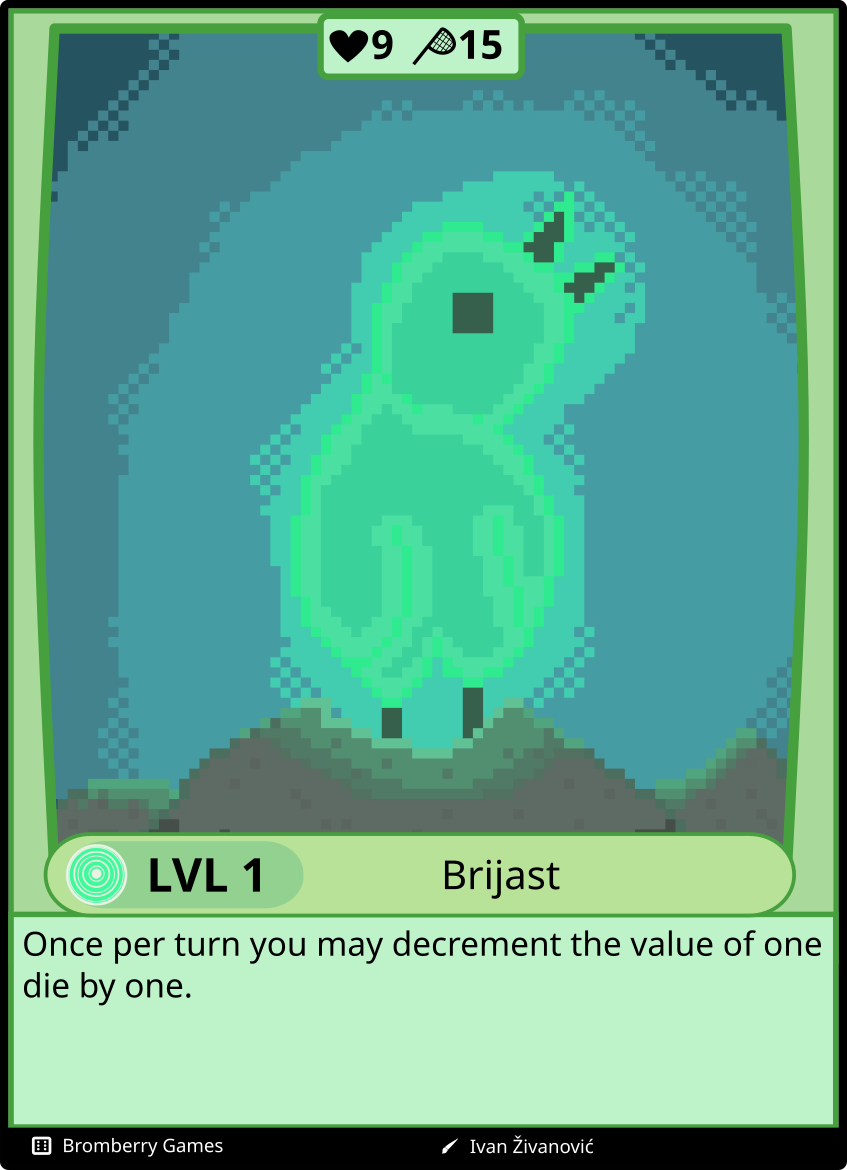
Ivan Živanović
Game & narrative designer · MA Psychology
Available for freelance & full-time · Remote from Malta
I'm a game and narrative designer based in Malta, with a Master's in psychology. My thesis was a qualitative study on player motivation to play board games using the Self-determination theory as a framwork. I make story happen through what players do, and I use what I know about motivation to tune how it feels.
Most recently I was a game designer on Druid's Haven, an ecosystem tower defense made by a remote team of eight for the IndieCade game design internship. It placed 3rd overall and won Most Releasable Game. Before that I wrote and designed the mysteries for Inkvestigations, a detective game played by letter, and spent two years designing and illustrating a creature card game.
I'm open to full-time design roles and to freelance writing, design and playtesting work. Below are the games, and under each skill, the devlog passages where I actually used it.
Start here
Three passages from my devlogs that show how I work.
Narrative design · Research and narrative design for Forced Farewell →
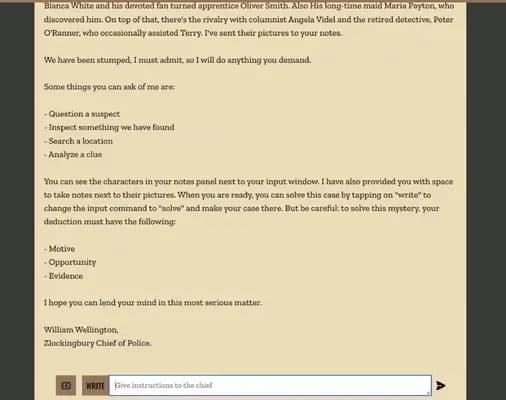
Keep reading →In Forced Farewell, a boy has been kidnapped and time is of the essence. In-world communication between the chief and the player isn't instant. Due to the urgency, they're sending telegraphs back and forth, instead of the regular letters, but time is still passing. I wanted to show the time pressure the characters are under with various ominous messages sent by the kidnappers. Since we had implemented the hints system where you'd get helpful messages from the chief every so often, I decided to use them to create the narrative and time pressure.
For example, soon after taking up the case this message is sent along the usual answer:
"Dear Mr. Holmes,
I'm sending you an urgent telegram. We have received a puzzling message in our mailbox today. Unfortunately there are neither sender's nor destination address on it. No postmark to be found. The same style of cutout newspapers has been used to communicate the message.
It simply reads: "The new address for the money is 221B Baker Street."
I may sound reckless in asking your continued support, even though this appears to be a clear message saying the thieves know of your involvement, and possibly a threat to your person. I will ask your local force for two constables to stand guard at your place. It might be a prank, but we must be careful.
Yours,
Constable Wellington"This one is ambiguous, the next one carries a subtle clue, and the final one is basically directly revealing what happened, but the player (hopefully) gets the satisfaction of revealing it to everyone.
6 Feb 2024 · Inkvestigations
Systems design · Design of Druid's Haven →
Keep reading →The most important design question for Druid's Haven was what biodiversity even looks like in a game. I designed the initial system for it. Here is the full document, but to summarize part of it:
There are three different types of plants (support, engineer, and deterrent), which provide something within the ecosystem (e.g. support provides resources). Planting diverse plants next to each other gives both a buff to show that species diversity is important.
Each individual plant has randomized stats within a range (e.g. an oak has between 100-150 HP). Harsh conditions like heat or disease travel along the map and affect the plants. The random stats for plants are to show that not every plant will die under the same conditions, which is why we need genetic diversity.
Towards the end of a level we would have cataclysmic events that heavily target one stat (which would kill a monoculture or specific plant), followed by a final wave to test the resilience of the ecosystem you've built.
17 Jul 2026 · Druid's Haven
Playtesting & iteration · Playtesting stories →
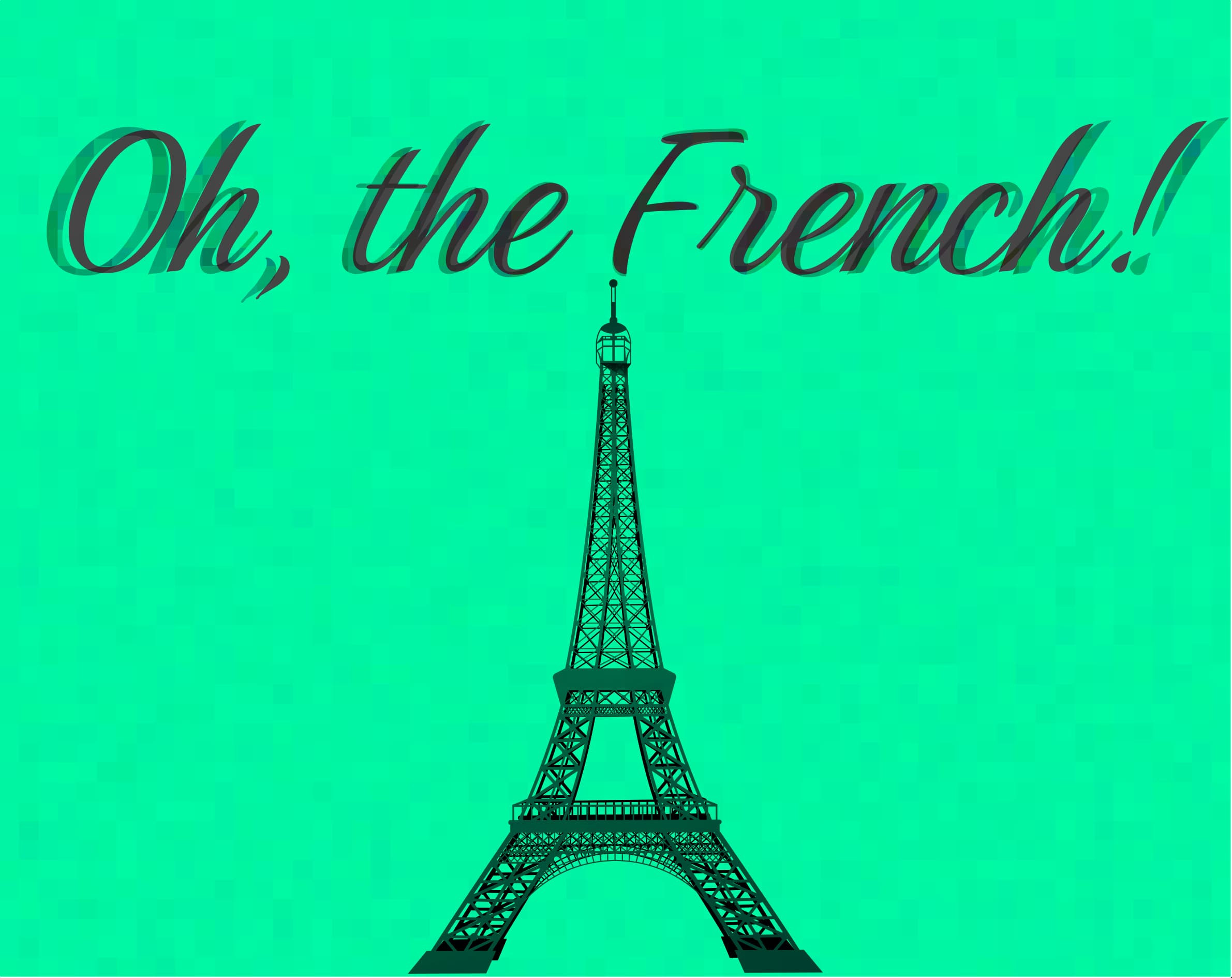
Keep reading →The most important part of playtesting is knowing what you are testing. For Oh, the French!, it was the atmosphere of the game as well as the ending. I asked on r/interactivefiction for feedback on my story, and even though Reddit is usually a terrible place for it, I got really lucky with one very kind player.
The feedback mostly concerned the ending as the player wanted influence over it and the game was frustrating that. It came on too fast and was inevitable, which felt bad. At first I was dismayed because that was the whole point of the game.
Thankfully, there are no real problems in feedback, only opportunities for more creative solutions. It helped me see that I had created a rude awakening, like throwing open the curtains to a midday sun. What I needed was a slow dawning. The same midday was coming, but gradual is more gentle on the eyes.
So I introduced a finer gradient toward the ending, which I think made the game more successful.
10 Apr 2025 · Oh, the French!
Skills, with evidence
Pick one to see the projects and the devlog passages where I used it.
- User research
Tools
- Figma / Penpot
Projects
Hover or hold a card for details.
- InternshipMade with Unity
- Plays on Web
- Plays on Windows
Druid's Haven
6 weeks (2026)
I was a game designer on a remote team of eight, as part of IndieCade's game design internship for the Climate Jam 2026. I designed the plant types, how biodiversity works in the game, and the seed economy, and I wrote the design documents the team worked from. We won the Most Releasable Game category and placed 3rd overall.
- Personal projectMade with Svelte
- Plays on Web
Inkvestigations
1 year (2023-2024)
An interactive fiction game where you play Sherlock Holmes, solving cases by exchanging letters with a hapless police chief. I wrote all the mysteries, designed how the story reaches the player, and did the web design.
- Solo projectMade with Twine
- Plays on Web
Oh, the French!
8 weeks (2025)
A short narrative game I made to learn Twine. Inspired by absurdist literature, it explores a kind of psychological horror. I reworked the ending after playtest feedback, and it became the most played game on my itch.io page.
 Personal project
- Plays on Tabletop
Zvery
2 years (2022–2024)
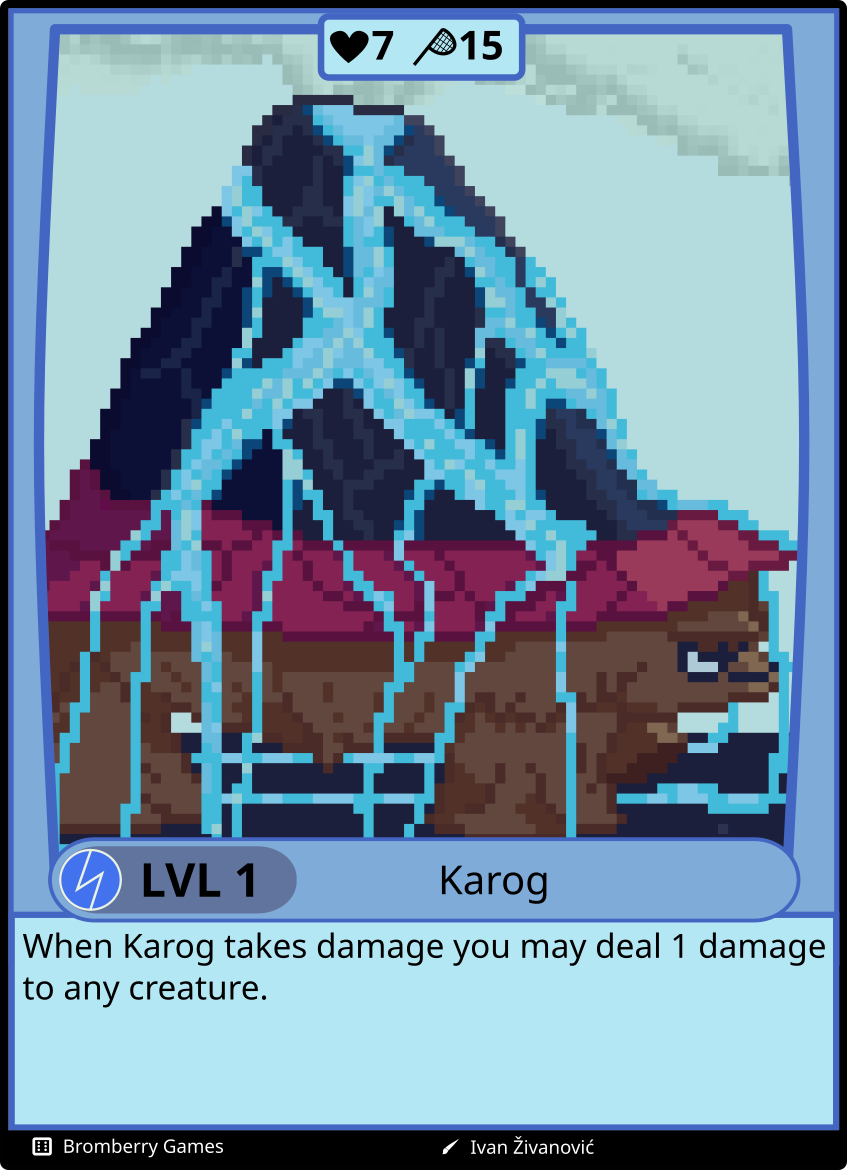
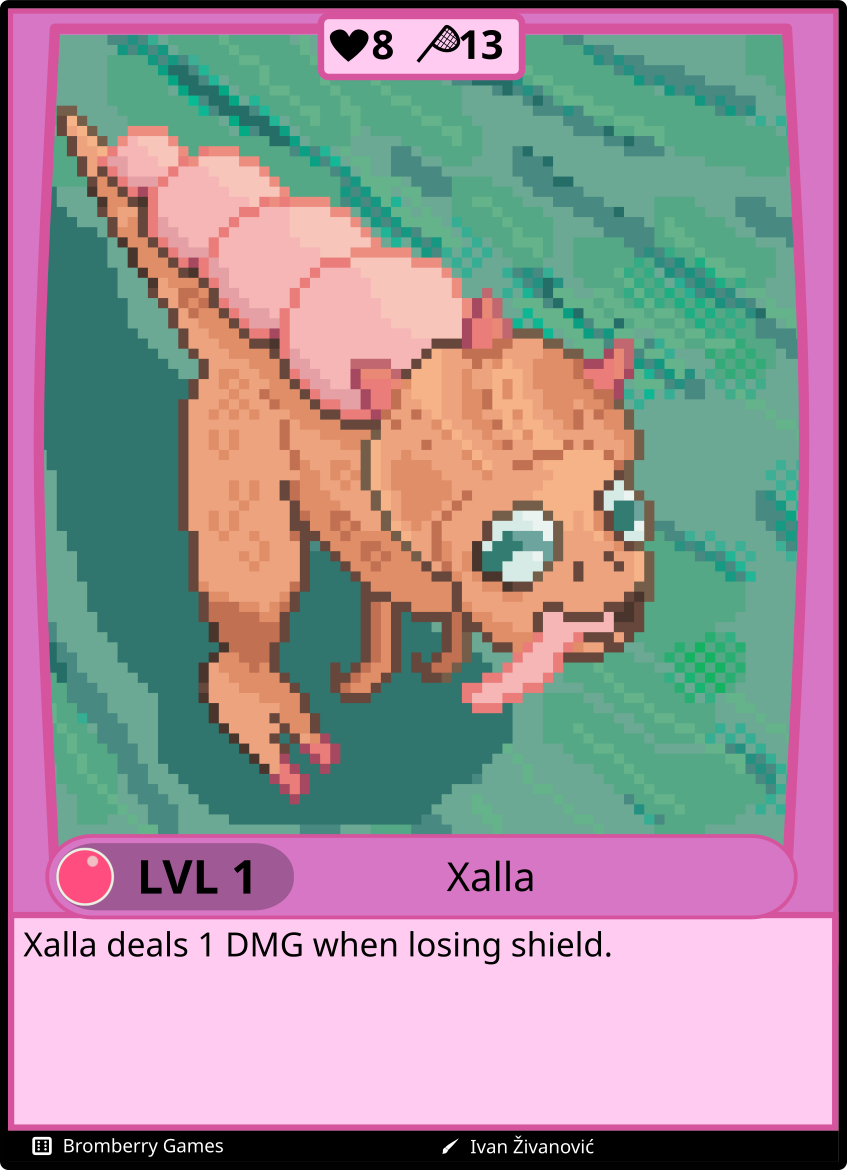
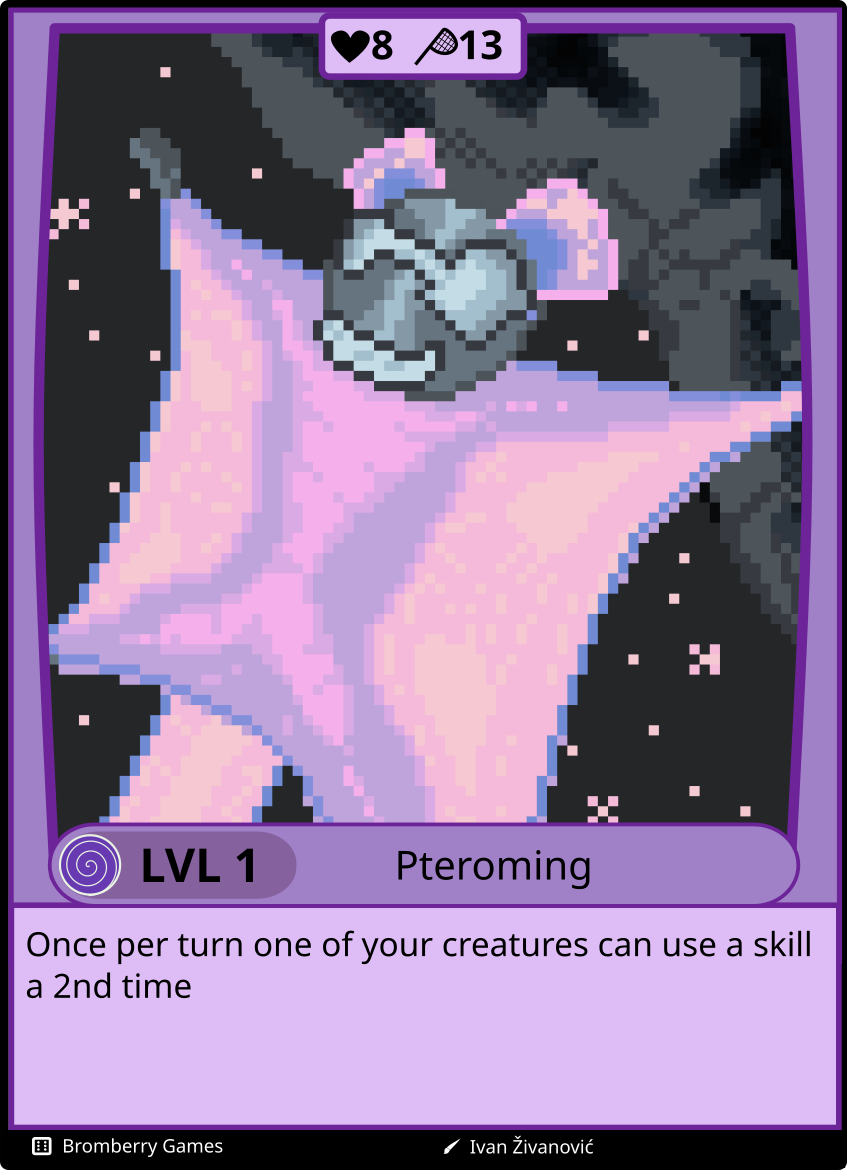
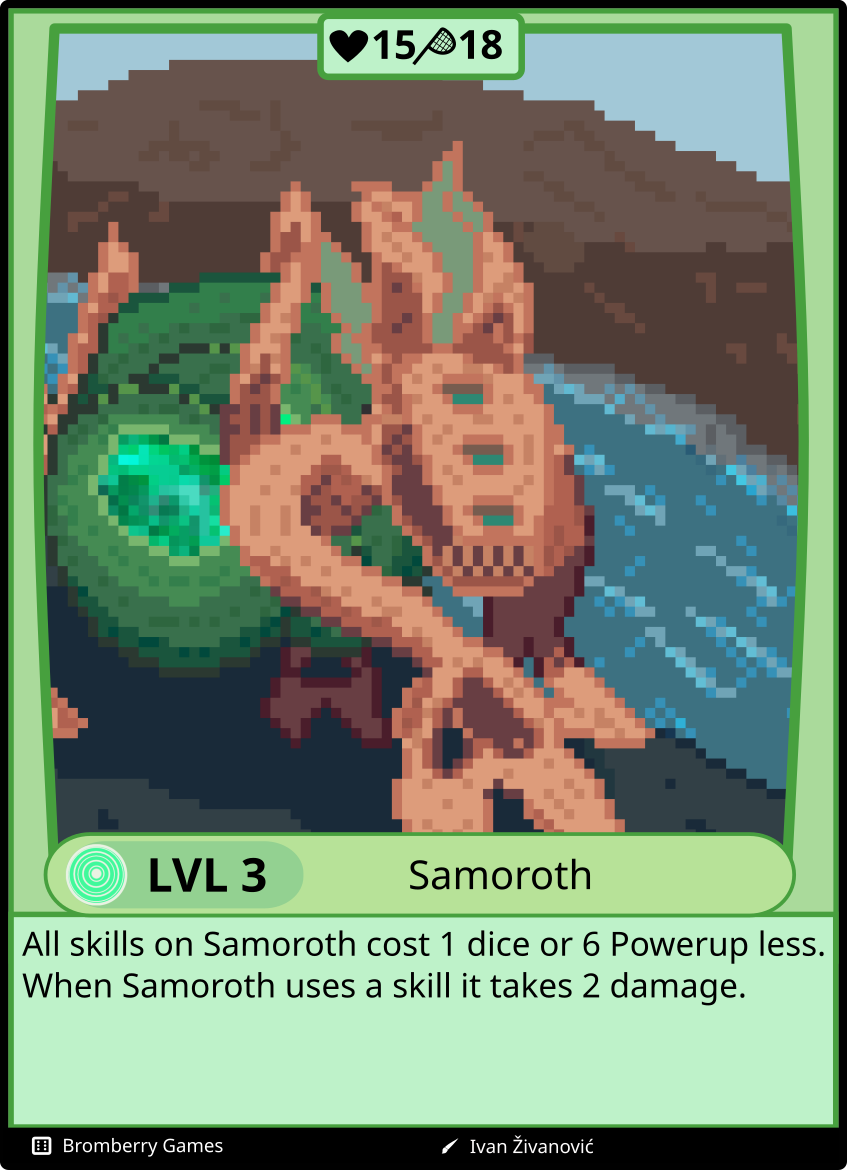
Zvery is a creature card game that uses dice as resources, inspired by Pokémon. My friend and I designed the game together over two years; I made all the art and graphic design. We ran lots of playtests and went through many rounds of balancing and iteration.
 Game jamMade with Godot
- Plays on Web
Yokai Madness
1 weekend (2025)
A high-score chaser I made in a weekend jam to learn GDScript, my first time programming. I used what I know about motivation to keep people playing: a leaderboard so players can see how far they could go, and no friction between dying and trying again. Players' comments in the jam said exactly that. It placed 30th of about 100 entries, and 9th for audio.
 Solo projectMade with Godot
- Plays on Web
- Plays on Tabletop
Deckhack
In progress
A roguelike played with a standard deck of cards. I first made it as a physical game called Rise Up for a design challenge, then reworked the rules after playtesting. I'm now making a digital version in Godot and learning a lot about UI and UX for digital card games.
Examples of how I used Systems design in my projects
Designing how rules, resources and numbers feed into each other across a game: economies, progression, ecosystems.
Druid's Haven · Design of Druid's Haven →
The most important design question for Druid's Haven was what biodiversity even looks like in a game. I designed the initial system for it. Here is the full document, but to summarize part of it:
There are three different types of plants (support, engineer, and deterrent), which provide something within the ecosystem (e.g. support provides resources). Planting diverse plants next to each other gives both a buff to show that species diversity is important.
Each individual plant has randomized stats within a range (e.g. an oak has between 100-150 HP). Harsh conditions like heat or disease travel along the map and affect the plants. The random stats for plants are to show that not every plant will die under the same conditions, which is why we need genetic diversity.
Towards the end of a level we would have cataclysmic events that heavily target one stat (which would kill a monoculture or specific plant), followed by a final wave to test the resilience of the ecosystem you've built.
17 Jul 2026
Druid's Haven · Design of Druid's Haven →
When Druid's Haven moved from distinct levels to an endless mode, the big problem became how seeds for new plants should spawn.
One problem was that if one plant was wiped out, you couldn't restore it. Another was at what rate and which conditions because now we had to balance the difficulty. If plants spawned seeds then it became an exponential function of more plants = more seeds = more plants.
The core problem was this: since seeds are our only resource, they are the primary medium for rewarding player behavior. Our goal was to teach the importance of biodiversity, but if every plant only provided its own seed, then we were constrained by our main reward system.
In the design document, I describe a couple solutions, but my main proposal was to split the seed into both a resource for new plants and a currency to buy upgrades in a shop. This serves to provide choices for the player and an opportunity for us to reward increasing biodiversity.
17 Jul 2026
Examples of how I used Narrative design in my projects
Designing how story, theme and message reach the player through gameplay and how mechanics show and reinforce narrative.
Inkvestigations · Research and narrative design for Forced Farewell →
In Forced Farewell, a boy has been kidnapped and time is of the essence. In-world communication between the chief and the player isn't instant. Due to the urgency, they're sending telegraphs back and forth, instead of the regular letters, but time is still passing. I wanted to show the time pressure the characters are under with various ominous messages sent by the kidnappers. Since we had implemented the hints system where you'd get helpful messages from the chief every so often, I decided to use them to create the narrative and time pressure.
For example, soon after taking up the case this message is sent along the usual answer:
"Dear Mr. Holmes,
I'm sending you an urgent telegram. We have received a puzzling message in our mailbox today. Unfortunately there are neither sender's nor destination address on it. No postmark to be found. The same style of cutout newspapers has been used to communicate the message.
It simply reads: "The new address for the money is 221B Baker Street."
I may sound reckless in asking your continued support, even though this appears to be a clear message saying the thieves know of your involvement, and possibly a threat to your person. I will ask your local force for two constables to stand guard at your place. It might be a prank, but we must be careful.
Yours,
Constable Wellington"This one is ambiguous, the next one carries a subtle clue, and the final one is basically directly revealing what happened, but the player (hopefully) gets the satisfaction of revealing it to everyone.
6 Feb 2024
Inkvestigations · How we designed mechanics to support the narrative →
Mystery is everywhere, but detective fiction most definitely is a genre. So how do you communicate that vibe through a game?
One trait that is manifested to the mega in detectives is perception. Their observational skills are what separate them from us Joes. This was where our game could shine: wherever a player chose to look, there something would be--even if I hadn't thought of it beforehand. Now, it was on the player to separate the chaff from grain and truly become Sherlock.
19 Jan 2024
Inkvestigations · How we designed mechanics to support the narrative →
Detectives are also usually very, very smart. The issue is that not every player is a gigabrained Sherlock. The simplest way to make someone feel smart is to make everyone else be really, really stupid.
In our world, thick police chiefs are thick on the ground. He literally cannot do anything without being told explicitly. Sometimes this can be frustrating, because we are tricked by the way he communicates and assume there's at least a shred of common sense. Rarely.
19 Jan 2024
Inkvestigations · How we designed mechanics to support the narrative →
The most important moment of the fantasy is solving the case to the shock of those around you. The game had turned out to be pretty difficult because, as it turns out, the game requires us Joes to have a detective's exceptional observational skills. So we introduced a support mechanic that increasingly nudged players towards the solution (e.g. the chief stumbles onto a clue). It was crucial that the hints felt organic and not patronizing.
Still, it was difficult, so we compromised by letting any right answer clear a story, so even a guess with mostly wrong explanations still succeeded. Yet we needed a way to reward those players who actually figure out the completely right solution.
We created a 3 star rating system. An accusation consists of the murderer, only this has to be correct, and in isolation it results in 1 star. Additionally a player can provide motive, opportunity and evidence. The more accurate information they provide the higher their score.
19 Jan 2024
Oh, the French! · Playtesting stories →
The most important part of playtesting is knowing what you are testing. For Oh, the French!, it was the atmosphere of the game as well as the ending. I asked on r/interactivefiction for feedback on my story, and even though Reddit is usually a terrible place for it, I got really lucky with one very kind player.
The feedback mostly concerned the ending as the player wanted influence over it and the game was frustrating that. It came on too fast and was inevitable, which felt bad. At first I was dismayed because that was the whole point of the game.
Thankfully, there are no real problems in feedback, only opportunities for more creative solutions. It helped me see that I had created a rude awakening, like throwing open the curtains to a midday sun. What I needed was a slow dawning. The same midday was coming, but gradual is more gentle on the eyes.
So I introduced a finer gradient toward the ending, which I think made the game more successful.
10 Apr 2025
Examples of how I used Gameplay design in my projects
Designing what the player does from moment to moment: mechanics, the core loop, choices, risk and reward.
Yokai Madness · Making more with less →
I started off with a game where the score rose with time as the player dodged enemies to stay alive, and I didn't want the exploding boxes to be just another loss-condition. So the boxes became the reward for better play: defusing a box by standing next to it earned you points, while letting it explode lost you points.
Looking back now, I'd probably leave out minus points, as I believe punishment never works but to frustrate. Theme and object implementation were definitely unsuccessful judging by their scores, but the gameplay and fun factor were acceptable.
29 Nov 2025
Yokai Madness · Making more with less →
When I completed the Godot tutorial that Yokai Madness grew out of, I noticed the teacher added a lot of pauses everywhere. For example, once you died, the game over screen was delayed by a couple of seconds, and after that a few more to see the start again button.
This can be a stylistic choice to create the effect of calm and reflection, but in a highscore chaser this was misplaced. The loop needed to be tighter, death to restart should be instant, and I made it so. Here's a review: "I think the game is pretty fun. It gets you to the action fast, you can do one run after another, it's pretty addicting."
29 Nov 2025
Deckhack · Why I removed movement from Rise Up →
The first problem was movement, and the fix was easy: I removed it. After all, it is through decrease that we achieve perfection. You can now fight any room at any time. In the initial version, I envisioned the player moving from room to room using the joker card, but this is bad for several reasons.
Fundamentally though, it only removed attention from the core game loop: staking cards. I required the player to hide the ace in the top row, which has the most cards per room, and you had to rise up through the rooms to find the ace. This simply increased the setup time for no reason. It made the game a little harder, which isn't bad in itself, but difficulty should come from the core game mechanic, staking cards against rooms, instead of a secondary one like movement.
Movement also slowed the game down: beating a room meant you had to move your joker into the next one, which does nothing except take up time. By removing movement from the equation, it also became easier to let go of the top row holding the ace, which reduces set-up. Also, it's just no fun to have to slog on through to the end and limit choices in a game such as this. If you have a great set of ability cards, you should not be forced to waste them on easier rooms just because movement is limiting you. You should be able to jump to the hardest rooms instead. As a result, the game is now easier to set up, to explain, and it plays faster, which makes it more fun.
10 Apr 2025
Inkvestigations · How we designed mechanics to support the narrative →
The most important moment of the fantasy is solving the case to the shock of those around you. The game had turned out to be pretty difficult because, as it turns out, the game requires us Joes to have a detective's exceptional observational skills. So we introduced a support mechanic that increasingly nudged players towards the solution (e.g. the chief stumbles onto a clue). It was crucial that the hints felt organic and not patronizing.
Still, it was difficult, so we compromised by letting any right answer clear a story, so even a guess with mostly wrong explanations still succeeded. Yet we needed a way to reward those players who actually figure out the completely right solution.
We created a 3 star rating system. An accusation consists of the murderer, only this has to be correct, and in isolation it results in 1 star. Additionally a player can provide motive, opportunity and evidence. The more accurate information they provide the higher their score.
19 Jan 2024
Zvery · Designing the cards of Zvery →
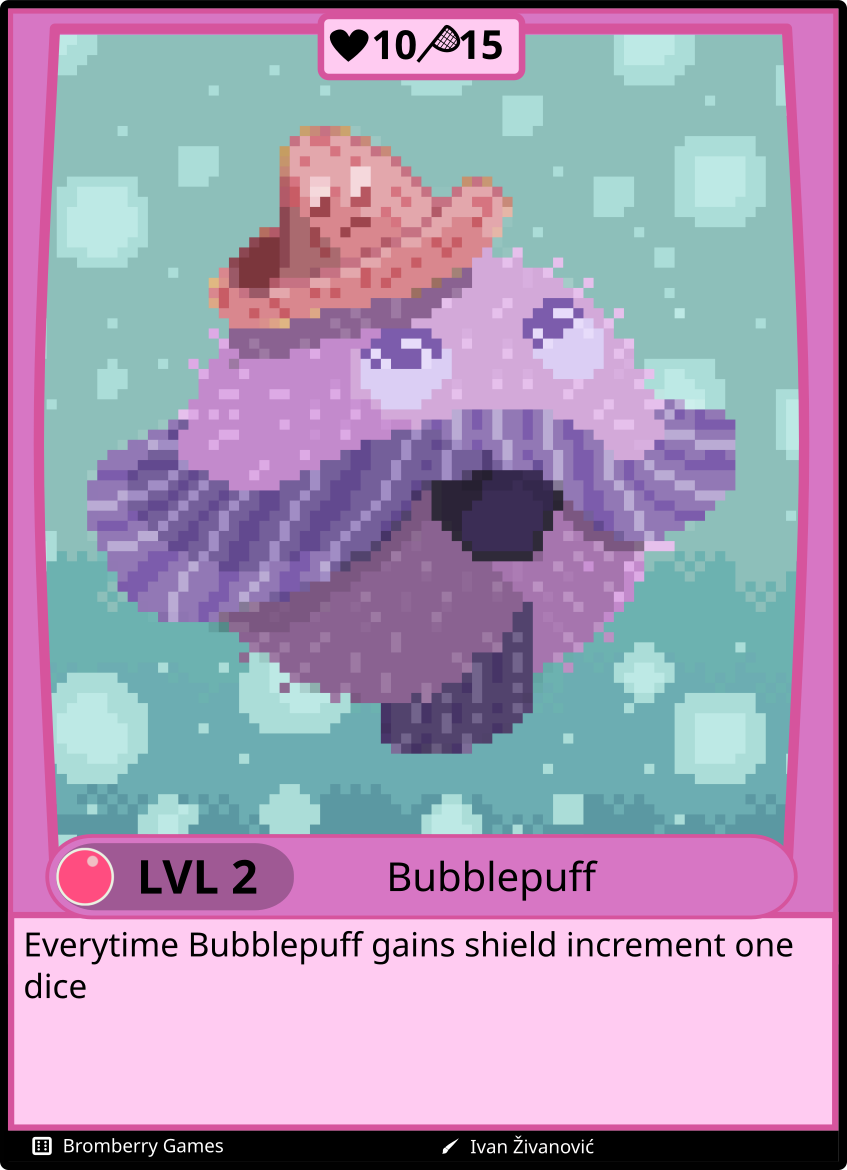
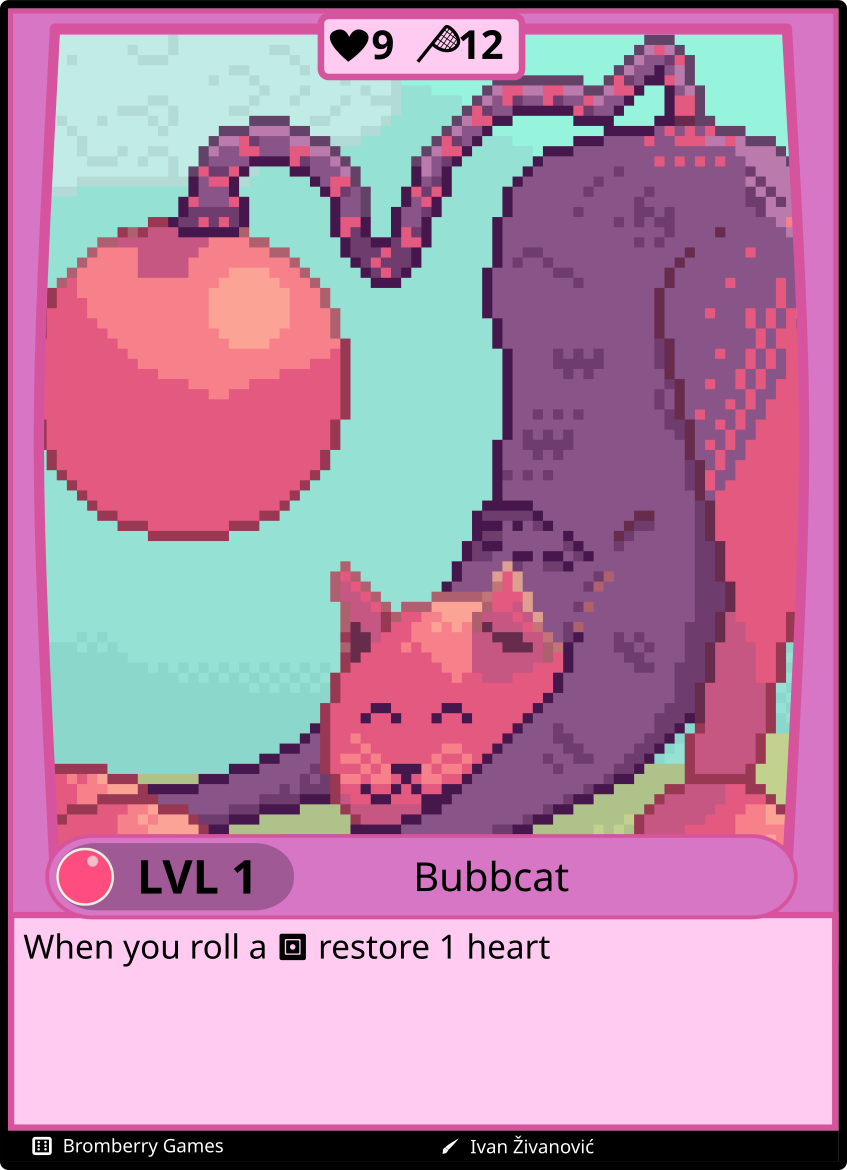
Catching in Zvery is a nifty mechanic where you add the current health with the catch value and roll your dice to get a number higher than the total catch value. So for example, Bubbcat starts with 21 total catch value, but as you fight and reduce its health, the catch value reduces.
For roll of five dice, the average result is around 17-18. Initially, its catch value was 18, which means that even at 1HP, it required an above average roll to catch. Since it is level 1, it should be very easy to catch, which is why we lowered it to 12.
3 Oct 2023
Examples of how I used Balancing in my projects
Tuning the numbers so every option is worth picking and the challenge feels right.
Yokai Madness · Adding difficulty levels to Yokai Madness after feedback →
During the game jam, I didn’t have time to playtest Yokai Madness, so I accidentally made the game too difficult. Probably what happened is that as I got better at the game, it started to feel too easy and I kept cranking up the difficulty. This resulted in an insanely difficult game, which is why I put Madness in the title.
It was very hard because it one-shot killed you. If you grazed one of the yokai, it was immediately over, which was quite frustrating. Though there’s a point to be made that it worked as a rage game because players felt defiance, it wasn’t very accessible.
After reading the feedback, I added a healthbar that gets depleted as you stay in contact with a yokai. It’s a bit more fair, but you also don’t have a lot of life. That is, you have about 3 seconds of contact in total.
31 Dec 2025
Yokai Madness · Adding difficulty levels to Yokai Madness after feedback →
I also added difficulty levels to Yokai Madness to keep it fun. If you get bored on the lowest difficulty, you can press a button and game settings change on the fly. Specifically, score increases faster, but there’s more yokai; and boxes stay slightly longer, you get more points if you defuse, or punish you less if you don’t defuse them. Hopefully, this means you can stay in the zone. Don’t worry, I think the highest difficulty is hard enough.
31 Dec 2025
Deckhack · Why I removed movement from Rise Up →
The second problem was obvious to anyone who played Rise Up for the first time: clubs was simply weaker than the rest of the abilities. For reference, it used to move a card from one room to another. Compare removing a card with spades, which can eliminate a king if you're determined or lucky, to clubs which lets you switch two cards on the board. The only situation where this is something which could feel game-changing is when you've already revealed a card using diamonds. In other words, it required another ability to be useful. It should have been self-evident from the start that, considering this dependence on another ability, clubs just wasn't clubbing it. Instead, now it gives the card in your possession a +1 buff. For example, the 10 of clubs now counts as an 11 without tapping the card. First of all, it's a lot stronger than moving or switching, and second it's always useful. Especially in the theoretical scenario that you are down to the last room in the last stage, and you know you are facing a king. Now, even with a queen of clubs, you can beat the game.
It gets even better combined with the fix for the third problem, the aces. Gaining a special ability, an ace, that you can use one time as an additional ability is cute, but it should either be an ULT or a permanent buff. The issue with the original design was that the aces became arbitrary tokens of progress rather than making you feel like you were progressing. I believe the player should feel they are further in the game simply by the result of the actions they are performing. I think a permanent buff does that and is more useful since the stages keep increasing the cards that are in each room. Therefore, I decided to change the effect of an ace to double all ability uses. Now, in the new stage you are revealing double the cards, or you are refilling double the abilities. In your first stage, you'll already have a buff: the clown's blessing. For example, if you got the Club Ace, you can now have all your club cards count as +2. Isn't that nice? Perhaps I will add an ult for the aces as well, which would make you lose the buff. I haven't tried it out yet, but maybe it would make the game too easy. Sounds like a balancing issue.
10 Apr 2025
Zvery · Designing the cards of Zvery →
Catching in Zvery is a nifty mechanic where you add the current health with the catch value and roll your dice to get a number higher than the total catch value. So for example, Bubbcat starts with 21 total catch value, but as you fight and reduce its health, the catch value reduces.
For roll of five dice, the average result is around 17-18. Initially, its catch value was 18, which means that even at 1HP, it required an above average roll to catch. Since it is level 1, it should be very easy to catch, which is why we lowered it to 12.
3 Oct 2023
Zvery · Designing the cards of Zvery →
Each Zvery gets a random "adaptation" of its type, a card that lists four skills. Will to Live shows the cost on the left and the effect to the right.
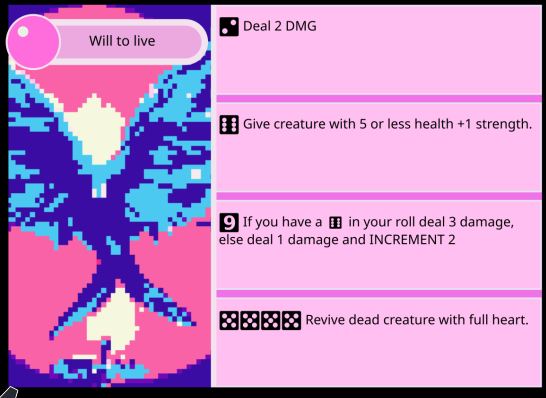
Skills can deal damage, manipulate your rolled dice, change Zvery stats and all kinds of effects. The harder a cost is to achieve through roll, the stronger the effect. For example, a single die deals 2 damage, whereas a 9 (which is any amount of dice adding up to 9 or more) can deal 3 damage. Most adaptations have their own kind of ultimate ability. This one lets you revive a creature for the cost of four 5s.
3 Oct 2023
Examples of how I used UX design in my projects
Making a game easy to learn and smooth to play by managing cognitive load, reducing friction, and providing clearer feedback.
Yokai Madness · Making more with less →
When I completed the Godot tutorial that Yokai Madness grew out of, I noticed the teacher added a lot of pauses everywhere. For example, once you died, the game over screen was delayed by a couple of seconds, and after that a few more to see the start again button.
This can be a stylistic choice to create the effect of calm and reflection, but in a highscore chaser this was misplaced. The loop needed to be tighter, death to restart should be instant, and I made it so. Here's a review: "I think the game is pretty fun. It gets you to the action fast, you can do one run after another, it's pretty addicting."
29 Nov 2025
Deckhack · Why I removed movement from Rise Up →
Movement also slowed the game down: beating a room meant you had to move your joker into the next one, which does nothing except take up time. By removing movement from the equation, it also became easier to let go of the top row holding the ace, which reduces set-up. Also, it's just no fun to have to slog on through to the end and limit choices in a game such as this. If you have a great set of ability cards, you should not be forced to waste them on easier rooms just because movement is limiting you. You should be able to jump to the hardest rooms instead. As a result, the game is now easier to set up, to explain, and it plays faster, which makes it more fun.
10 Apr 2025
Examples of how I used Player psychology in my projects
Using psychology understanding, such as motivation, reward, flow and competence, to design and tune the experience to match what players need.
Yokai Madness · Making more with less →
Where does fun come from? Does it come purely from the gameplay experience or from being good at the game? For a high score chaser, obviously the latter. The basic psychological need for competence, i.e. feeling effective and mastering our environment, is that which drives us to try again and again.
It is the designer's job to make the fulfillment of this need possible and obvious by providing feedback, e.g. with a high score. However, if players only have their own score to judge against, eventually they'll reach a plateau. They might think they've reached the peak and stop playing.
29 Nov 2025
Yokai Madness · Making more with less →
A simple way to show players how far they could go is a leaderboard. Here's a comment from the submission page: "I really like this game haha. How is someone able to get 60 points?! It was very hard to get to the high score board at all :D"
Two things stand out. First, they saw that there are higher heights and second they tried hard to get onto the scoreboard. Both in combination led them to put in more effort = more time. A review that makes this explicit by another player: "Adding leaderboard was a great idea, it motivated me to play more."
29 Nov 2025
Druid's Haven · Design of Druid's Haven →
The core problem was this: since seeds are our only resource, they are the primary medium for rewarding player behavior. Our goal was to teach the importance of biodiversity, but if every plant only provided its own seed, then we were constrained by our main reward system.
In the design document, I describe a couple solutions, but my main proposal was to split the seed into both a resource for new plants and a currency to buy upgrades in a shop. This serves to provide choices for the player and an opportunity for us to reward increasing biodiversity.
17 Jul 2026
Druid's Haven · Researching tower defense before designing one →
While researching tower defense games for Druid's Haven, I was also reading IGDA's Environmental Game Design Playbook to learn more about communicating pro-environmental messages through games. The first part is about psychology, so I was familiar with most of the theories, but it was very useful to see them presented in a games context. Especially the game examples listed for every tactic.
The book, for me personally, became a cornerstone for the design, i.e. how we could teach something about our environment while also empowering the player to act on it.
Specifically, basing it on the real world (creating environmental knowledge) and giving the player real world analogues to deal with it (creating environmental self-efficacy). For example, an apartment building is generating heat that hurts the plants around it, so giving the player the ability to put green walls on them which reduce heat in and around the building.
Unfortunately, we ran out of time before implementing that idea, but doing a lot of research helped me form a strong vision for the game and stay passionate throughout development.
8 Jul 2026
Yokai Madness · Adding difficulty levels to Yokai Madness after feedback →
I also added difficulty levels to Yokai Madness to keep it fun. If you get bored on the lowest difficulty, you can press a button and game settings change on the fly. Specifically, score increases faster, but there’s more yokai; and boxes stay slightly longer, you get more points if you defuse, or punish you less if you don’t defuse them. Hopefully, this means you can stay in the zone. Don’t worry, I think the highest difficulty is hard enough.
31 Dec 2025
Zvery · Woox →
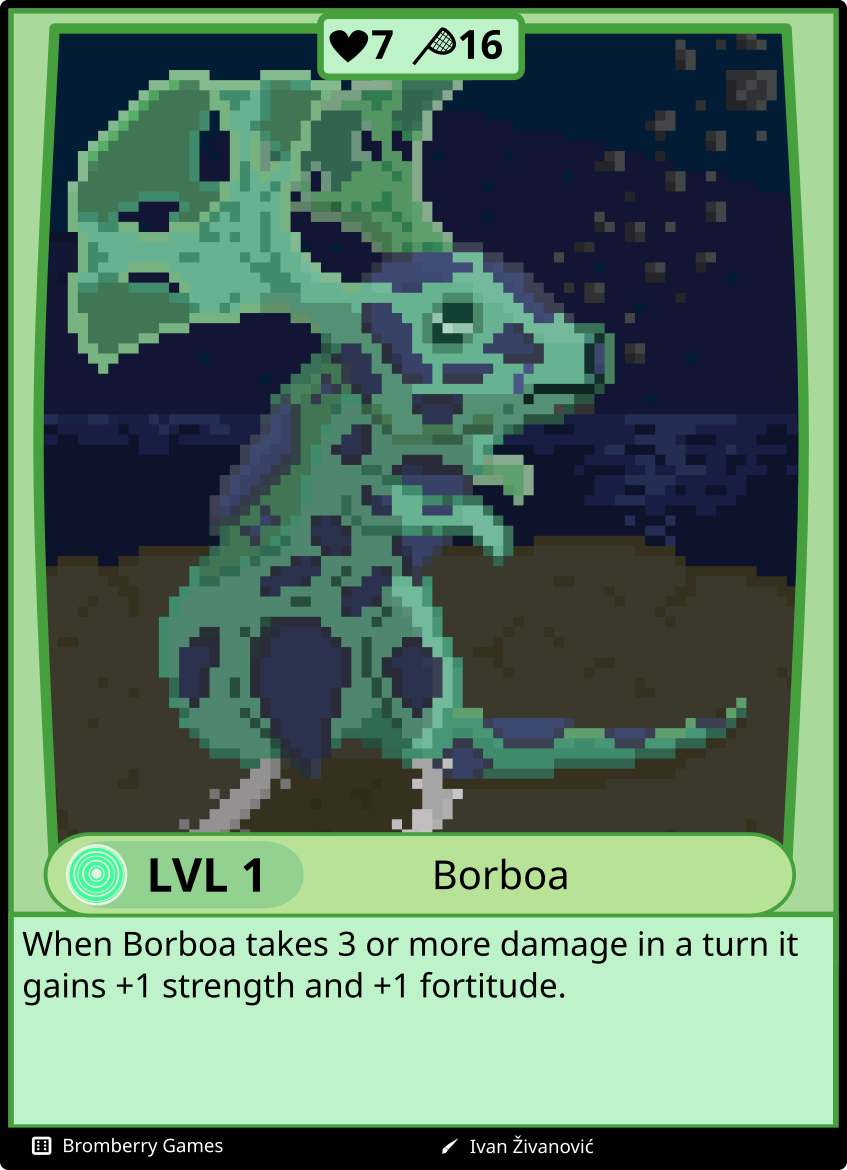
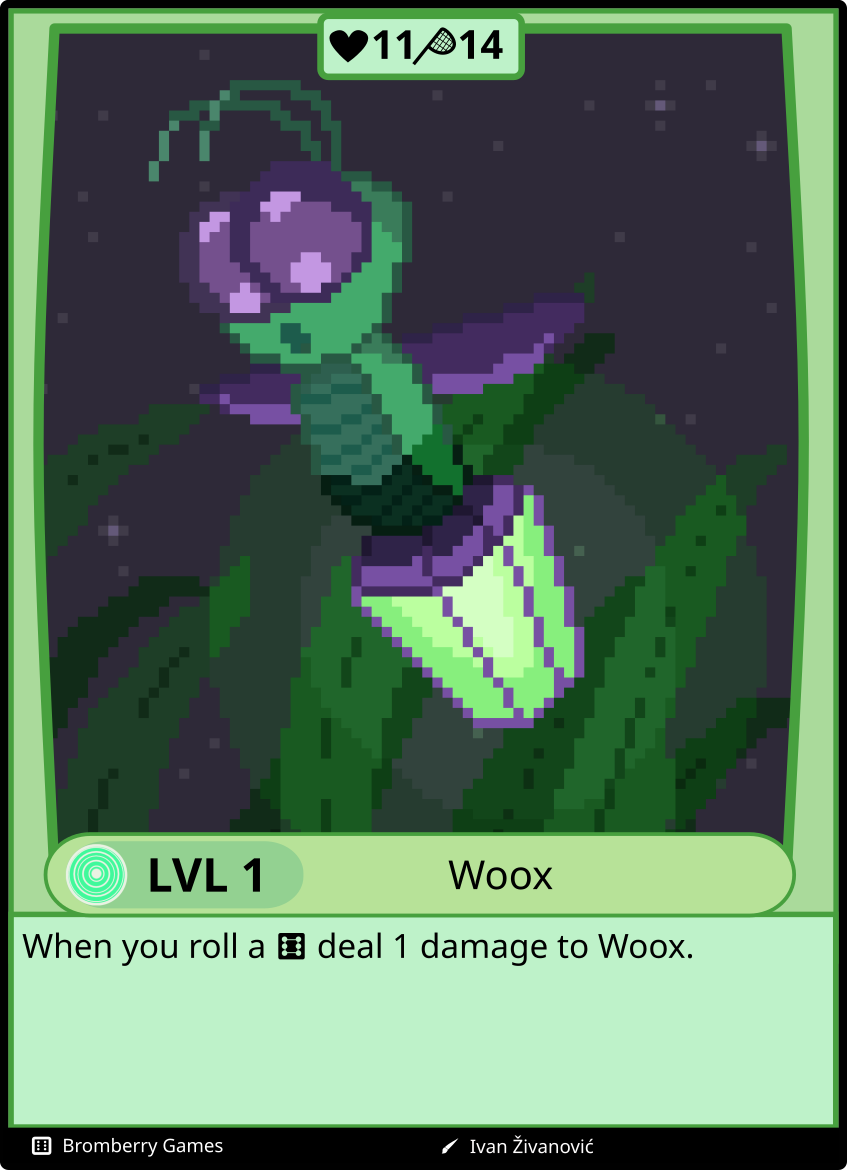

I decided to pixel the Zvery from the lower levels upward. I probably should have done that from the get go. Why? Because during playtesting the beginning should be the most enjoyable so that the players want to continue playing. The difference between a card having even a bad art work and no artwork at all is indescribable. Currently, a lot of the fun is missing because the lower level cards often don't have artwork. Why didn't I do it sooner? Well, mostly because I got an idea and just started pixeling and often they just didn't look like level 1 or 2 Zvery. Lesson learned. Here's Woox:
8 Jan 2023
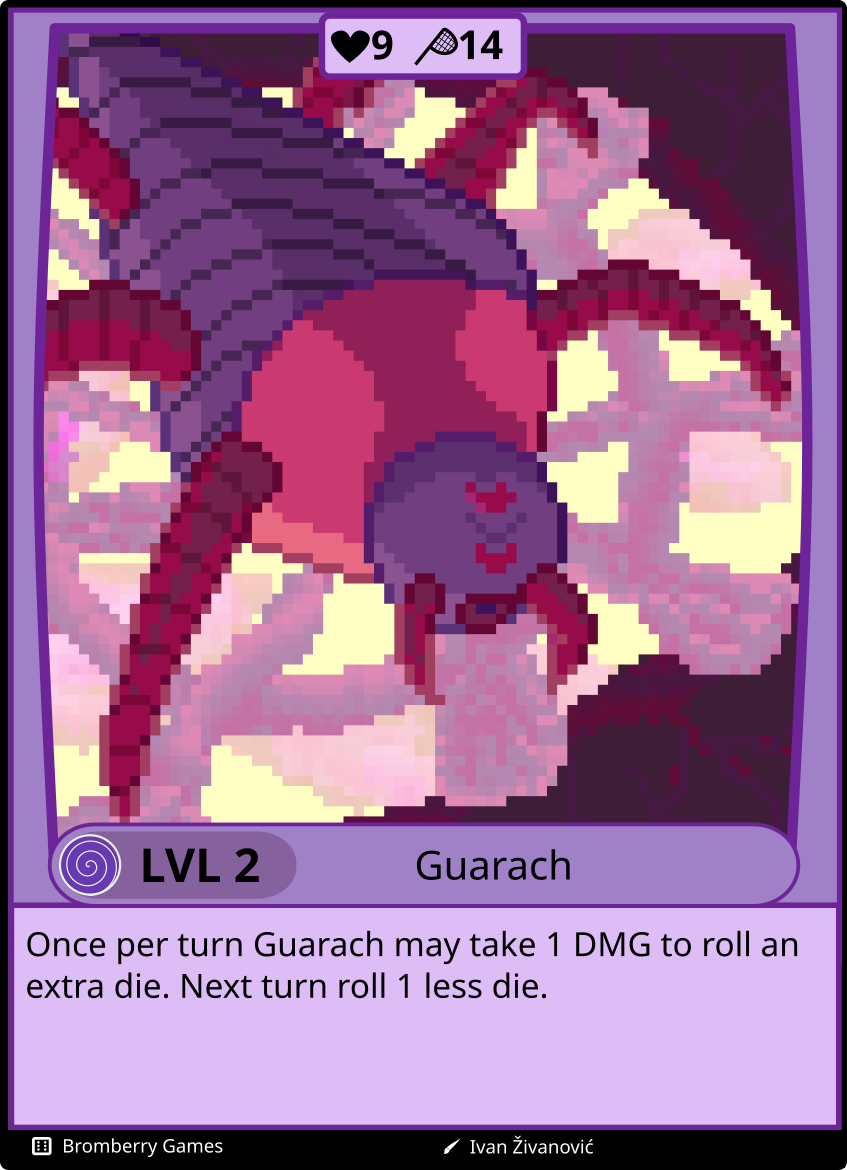
Zvery · Guarach →
It feels like, by simply adding a mouth and an expression, the design was elevated to something worthwhile. Perhaps it's my imagination. Let me know what you think, but it seems humans really cling onto any kind of anthropomorphic feature to give something personality. Yes, I do generalize from my subjective experience onto the broader population.
21 Dec 2022
Examples of how I used Writing in my projects
Coming up with stories and the words players read: prose, dialogue, descriptions.
Inkvestigations · Research and narrative design for Forced Farewell →
In Forced Farewell, a boy has been kidnapped and time is of the essence. In-world communication between the chief and the player isn't instant. Due to the urgency, they're sending telegraphs back and forth, instead of the regular letters, but time is still passing. I wanted to show the time pressure the characters are under with various ominous messages sent by the kidnappers. Since we had implemented the hints system where you'd get helpful messages from the chief every so often, I decided to use them to create the narrative and time pressure.
For example, soon after taking up the case this message is sent along the usual answer:
"Dear Mr. Holmes,
I'm sending you an urgent telegram. We have received a puzzling message in our mailbox today. Unfortunately there are neither sender's nor destination address on it. No postmark to be found. The same style of cutout newspapers has been used to communicate the message.
It simply reads: "The new address for the money is 221B Baker Street."
I may sound reckless in asking your continued support, even though this appears to be a clear message saying the thieves know of your involvement, and possibly a threat to your person. I will ask your local force for two constables to stand guard at your place. It might be a prank, but we must be careful.
Yours,
Constable Wellington"This one is ambiguous, the next one carries a subtle clue, and the final one is basically directly revealing what happened, but the player (hopefully) gets the satisfaction of revealing it to everyone.
6 Feb 2024
Oh, the French! · A style guide for a Twine game →
When I started Oh, the French! I had a strong vision for it, but I had two problems. First, since the inspiration was absurdist literature, there was a very real danger of appearing (and becoming) lazy with the prose. I needed a way to make everything intentional and to hold myself accountable to a certain standard.
Second, very early on I was already introducing descriptions and dialogue inconsistent with the vision. I think that's understandable especially when we're writing to solve problems. For example, I noticed I didn't explain an item or a location very well, so I went into the Twine node and added some text.
The words emerged from different headspaces. The inspired prose is from the realm of ideas and feelings, while this other one was more empirical and utilitarian. Both are necessary, but they need to be seamless.
30 Jan 2025
Oh, the French! · A style guide for a Twine game →
My solution to inconsistent prose in Oh, the French! was a style guide. It was written so that I would have an "objective" reference against which to compare my writing. For example:
- Descriptions cannot contain colors, only black, white, grey, or none
- Characters must be ungendered
- Nouns should always use the definite article (the house, the street, etc.)
So as I was writing, sentences like the following would come up: "The bleak buildings cast a black shadow onto the street." This is something I'd check ten times without noticing the indefinite article. Corrected: "The bleak buildings cast the black shadow onto the street."
Obviously, since this was for personal use, I didn't have to add a lot of clarifications, but it saved me so much time and caught so many inconsistencies that I'll make it a point to have one for every game. This isn't a particular burden for me as I document everything anyway.
30 Jan 2025
Examples of how I used Content design in my projects
Designing the individual pieces a game is built from, such as cards, abilities, items. Also creating narrative pieces within larger games such as quests or episodic content.
Deckhack · Why I removed movement from Rise Up →
The second problem was obvious to anyone who played Rise Up for the first time: clubs was simply weaker than the rest of the abilities. For reference, it used to move a card from one room to another. Compare removing a card with spades, which can eliminate a king if you're determined or lucky, to clubs which lets you switch two cards on the board. The only situation where this is something which could feel game-changing is when you've already revealed a card using diamonds. In other words, it required another ability to be useful. It should have been self-evident from the start that, considering this dependence on another ability, clubs just wasn't clubbing it. Instead, now it gives the card in your possession a +1 buff. For example, the 10 of clubs now counts as an 11 without tapping the card. First of all, it's a lot stronger than moving or switching, and second it's always useful. Especially in the theoretical scenario that you are down to the last room in the last stage, and you know you are facing a king. Now, even with a queen of clubs, you can beat the game.
It gets even better combined with the fix for the third problem, the aces. Gaining a special ability, an ace, that you can use one time as an additional ability is cute, but it should either be an ULT or a permanent buff. The issue with the original design was that the aces became arbitrary tokens of progress rather than making you feel like you were progressing. I believe the player should feel they are further in the game simply by the result of the actions they are performing. I think a permanent buff does that and is more useful since the stages keep increasing the cards that are in each room. Therefore, I decided to change the effect of an ace to double all ability uses. Now, in the new stage you are revealing double the cards, or you are refilling double the abilities. In your first stage, you'll already have a buff: the clown's blessing. For example, if you got the Club Ace, you can now have all your club cards count as +2. Isn't that nice? Perhaps I will add an ult for the aces as well, which would make you lose the buff. I haven't tried it out yet, but maybe it would make the game too easy. Sounds like a balancing issue.
10 Apr 2025
Zvery · Designing the cards of Zvery →
Each Zvery gets a random "adaptation" of its type, a card that lists four skills. Will to Live shows the cost on the left and the effect to the right.
Skills can deal damage, manipulate your rolled dice, change Zvery stats and all kinds of effects. The harder a cost is to achieve through roll, the stronger the effect. For example, a single die deals 2 damage, whereas a 9 (which is any amount of dice adding up to 9 or more) can deal 3 damage. Most adaptations have their own kind of ultimate ability. This one lets you revive a creature for the cost of four 5s.
3 Oct 2023
Zvery · Designing the cards of Zvery →
The third and final card type are mutations. These cards have two effects that are active at different times.
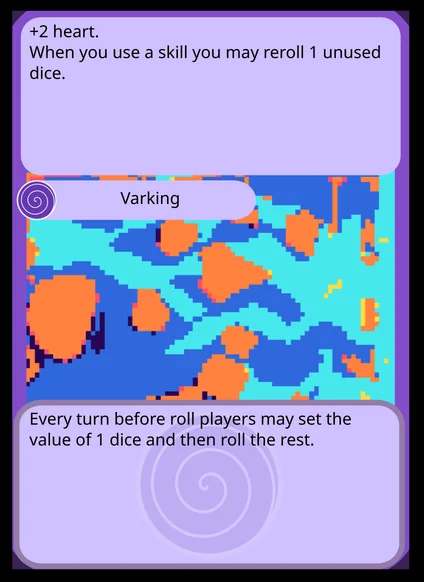
Mutations are laid out before and active during fights as "area effects", i.e. they create additional effects or conditions during a battle, which is the bottom effect. Varking for example lets players set a die before rolling their dice, a very powerful effect.If the active player defeats the wild Zvery, they could choose to take this card and give one of their Zvery the top effect. Crucially, unlike adaptations which need to match the Zvery's typing, a mutation can be any type. This creates interesting interactions between their abilities.
3 Oct 2023
Zvery · Cosmoon →
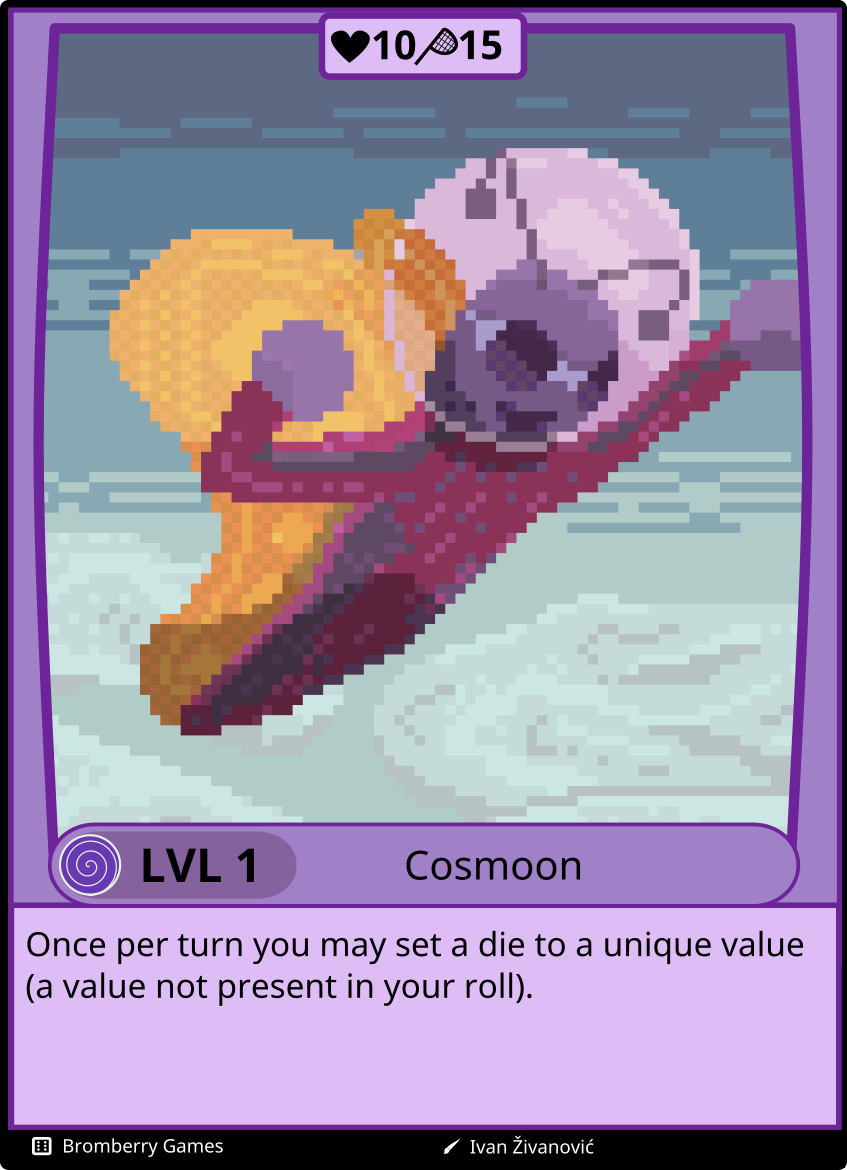
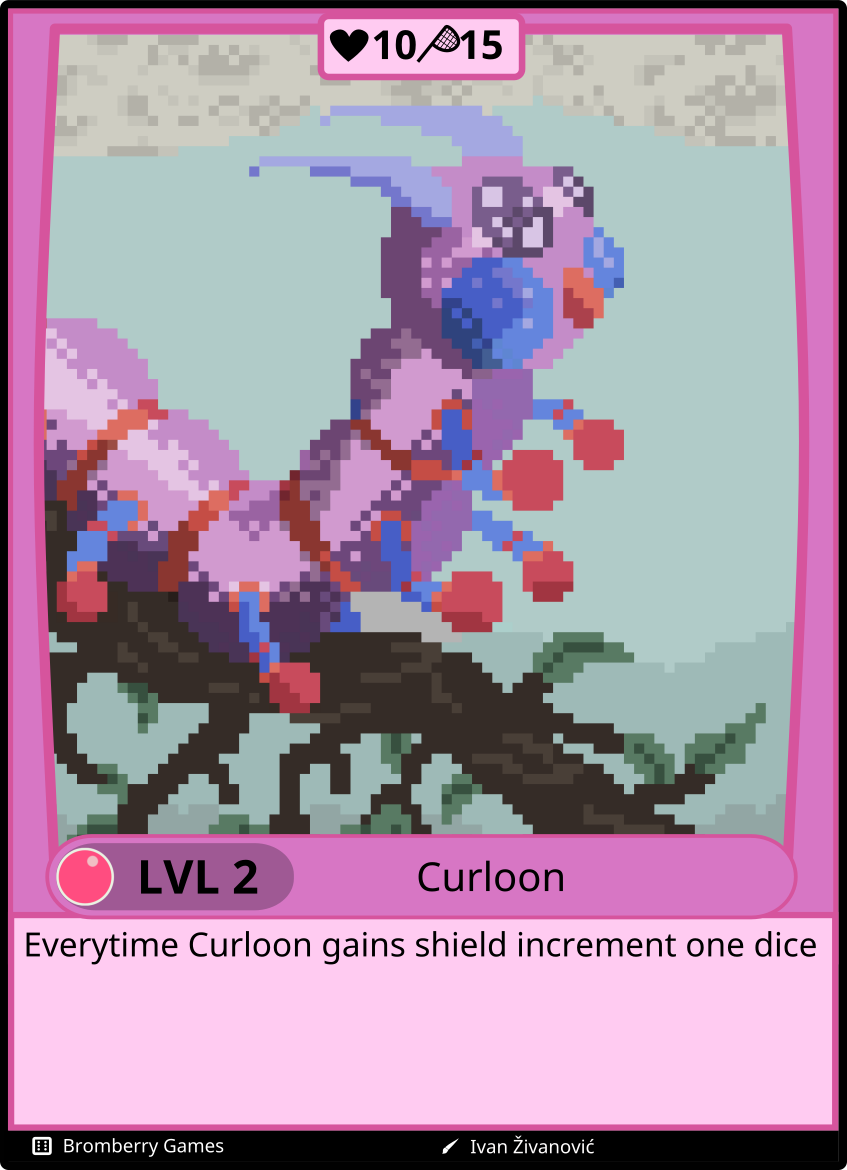
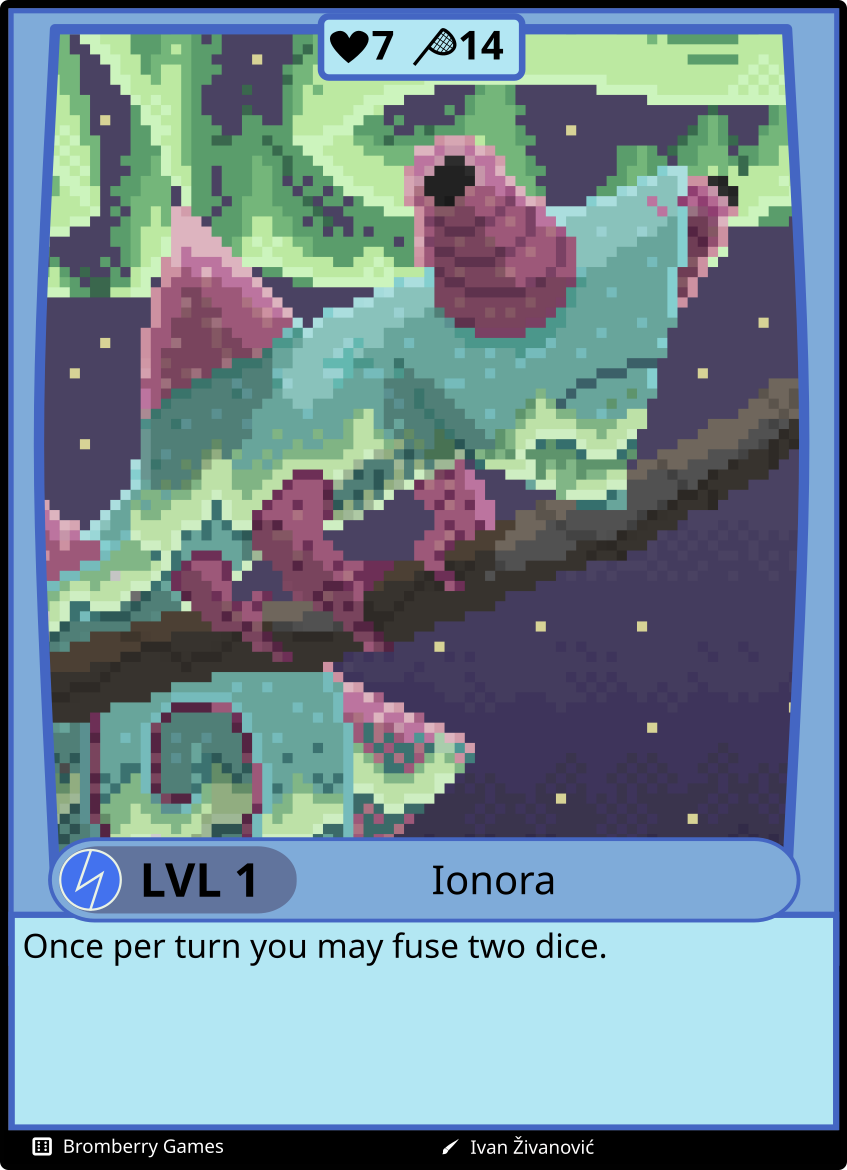
Obviously Pokemon has the classic insect type evolutions, so I thought that it might be cool to do something similar. I also changed Curloon's colors to match Cosmoon's. I wasn't satisfied with the original anyway.
Cosmoon is a void type Zvery and it's just an astronaut butterfly. In the design-gif you can see me scale back the anthropomorphism back a lot and I think that was a good move. Not only can I not draw humans, it just looked out of space (some pun intended). I like giving the creatures some things that are human objects but which just look like part of their body. (They usually become goggles for some reason.)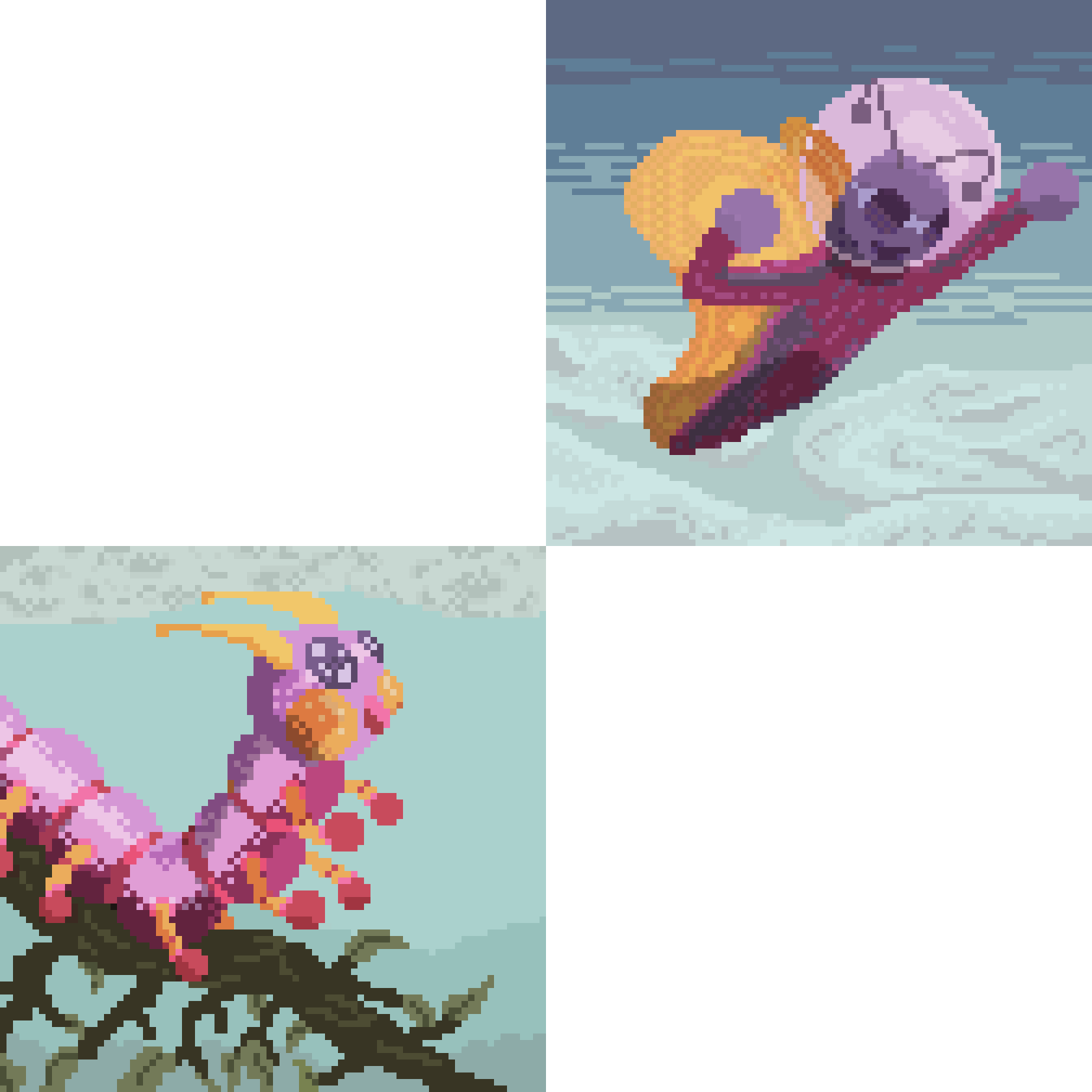
7 Feb 2023
Zvery · Shardoon →
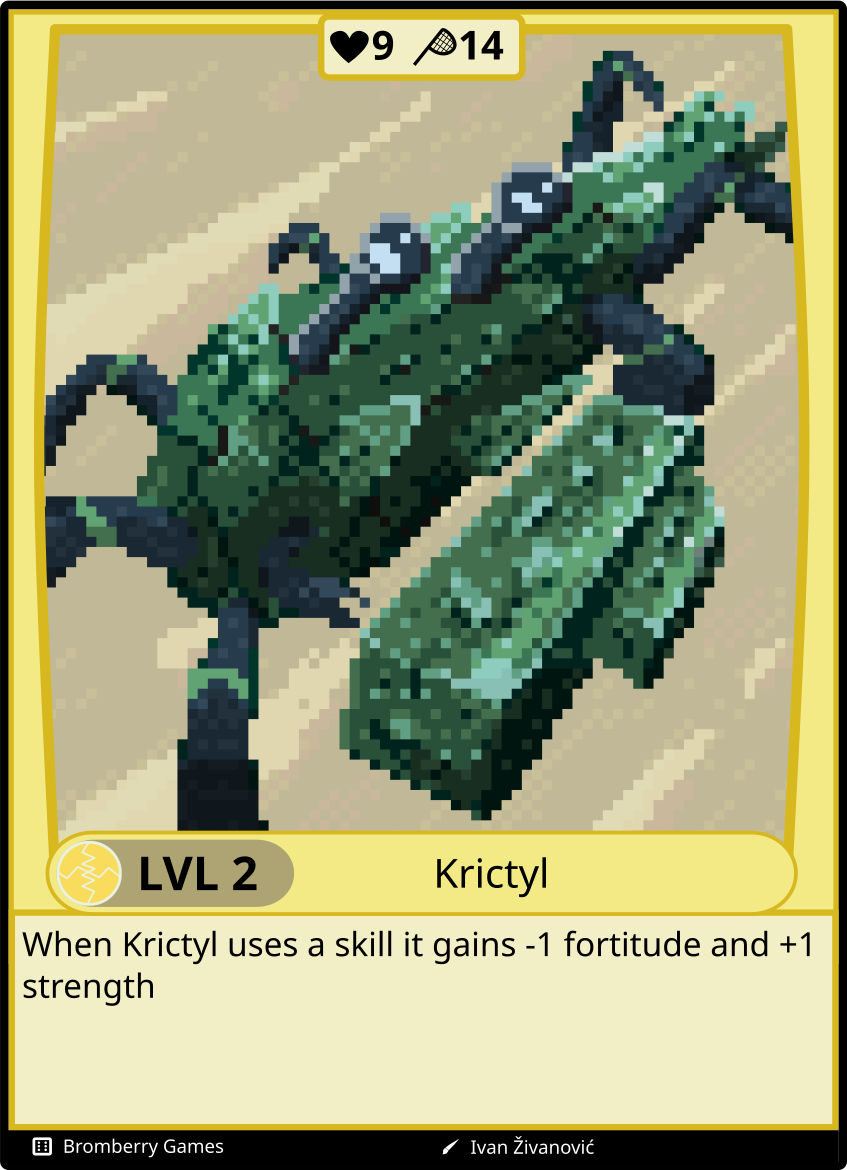
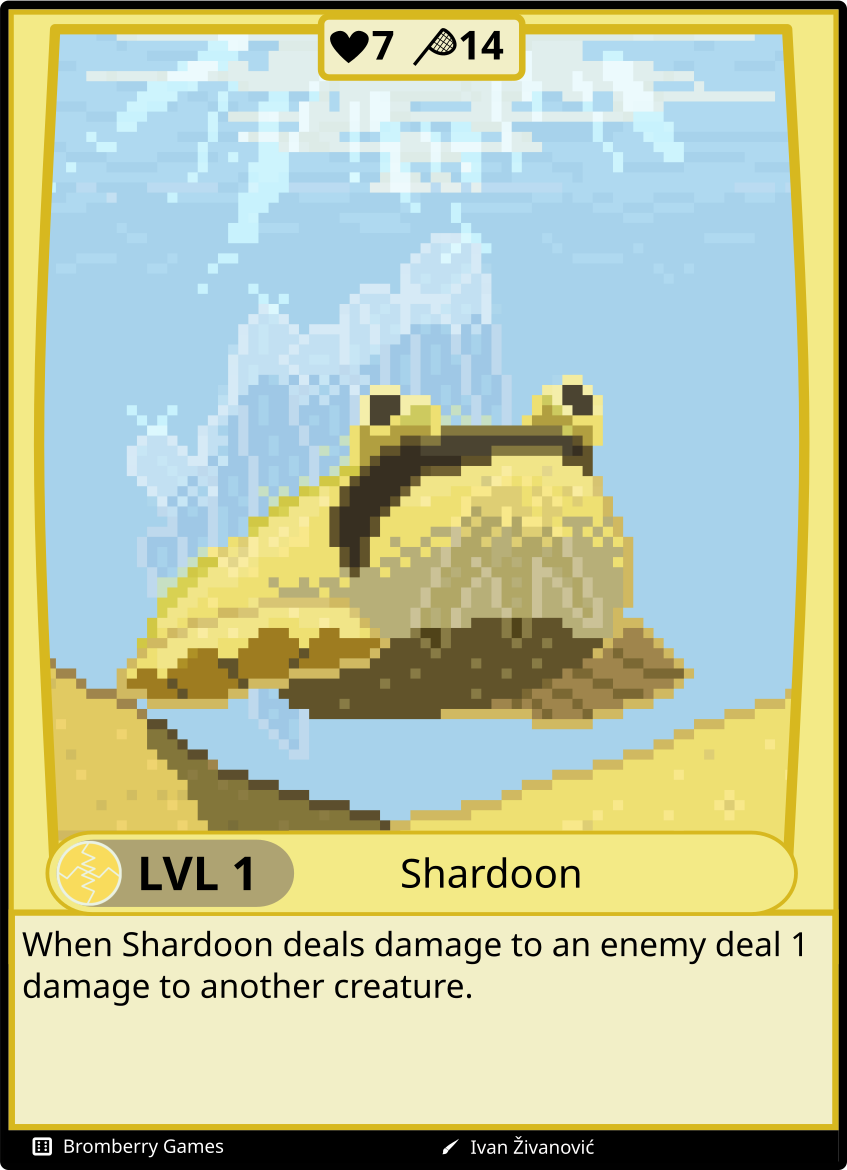
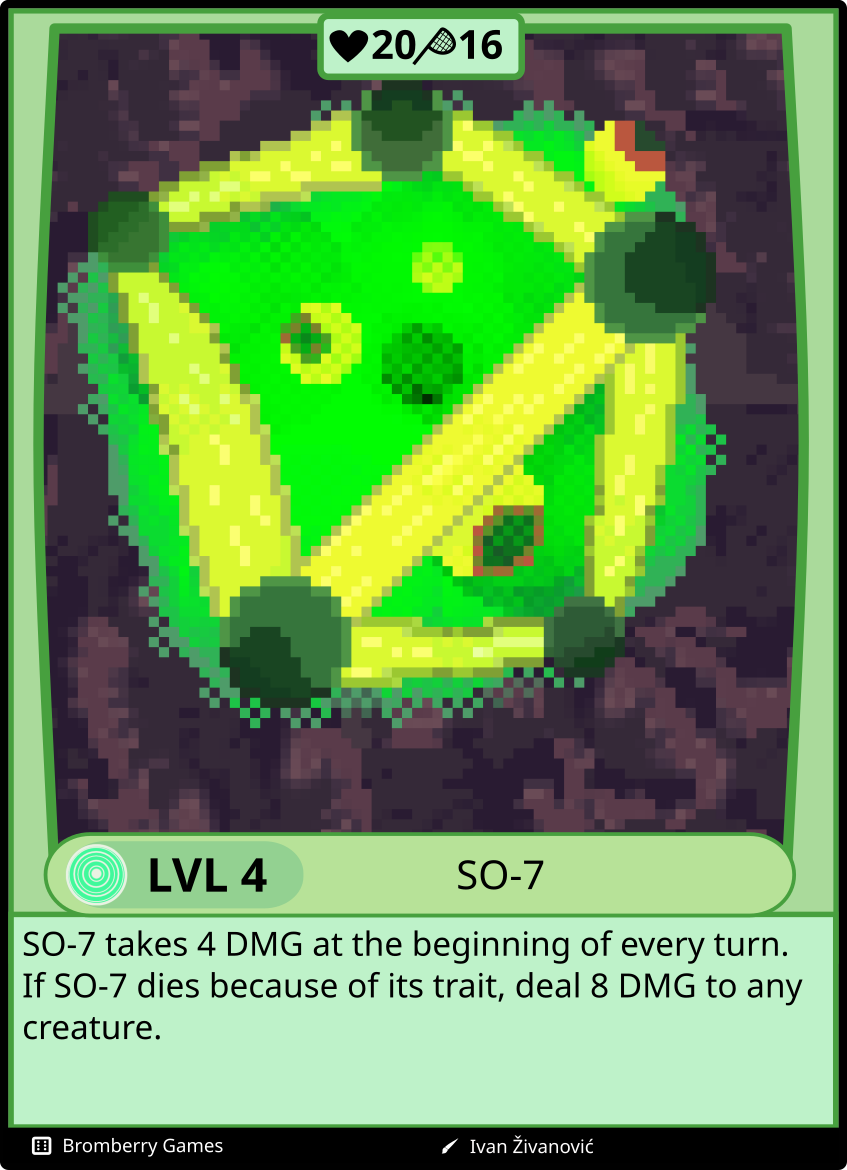
I have incorporated ChatGPT into my process, of course. It really just makes the initial research fun and dynamic. I decided on a type (crystal) looked at the card I wanted to create a creature for, and abstracted its trait as: "what's an individual animal that can damage two or more animals at once." I got a list in which the Australian Stonefish was mentioned. Looking at the fish it might as well be a crystal, but more importantly, it has so much personality without even adding anything to it, so I quickly settled on that one. Then I asked ChatGPT about the detailed anatomy of this fish where it mentioned, among other things, that it has 13 spinal spikes that contain its poison. So obviously this was what would become the crystal theme of the creature: crystal spikes.
10 Jan 2023
Examples of how I used Playtesting & iteration in my projects
Watching people play, reading their feedback and changing the design because of it.
Oh, the French! · Playtesting stories →
The most important part of playtesting is knowing what you are testing. For Oh, the French!, it was the atmosphere of the game as well as the ending. I asked on r/interactivefiction for feedback on my story, and even though Reddit is usually a terrible place for it, I got really lucky with one very kind player.
The feedback mostly concerned the ending as the player wanted influence over it and the game was frustrating that. It came on too fast and was inevitable, which felt bad. At first I was dismayed because that was the whole point of the game.
Thankfully, there are no real problems in feedback, only opportunities for more creative solutions. It helped me see that I had created a rude awakening, like throwing open the curtains to a midday sun. What I needed was a slow dawning. The same midday was coming, but gradual is more gentle on the eyes.
So I introduced a finer gradient toward the ending, which I think made the game more successful.
10 Apr 2025
Yokai Madness · Adding difficulty levels to Yokai Madness after feedback →
During the game jam, I didn’t have time to playtest Yokai Madness, so I accidentally made the game too difficult. Probably what happened is that as I got better at the game, it started to feel too easy and I kept cranking up the difficulty. This resulted in an insanely difficult game, which is why I put Madness in the title.
It was very hard because it one-shot killed you. If you grazed one of the yokai, it was immediately over, which was quite frustrating. Though there’s a point to be made that it worked as a rage game because players felt defiance, it wasn’t very accessible.
After reading the feedback, I added a healthbar that gets depleted as you stay in contact with a yokai. It’s a bit more fair, but you also don’t have a lot of life. That is, you have about 3 seconds of contact in total.
31 Dec 2025
Deckhack · Why I removed movement from Rise Up →
Playtesting showed three problems with the first version of Rise Up. Here they are, with how I tried to solve each:
- Movement made the game worse. So I (re)moved it.
- Clubs was straight up and irrefutably useless. So I changed it to buff each club card by 1.
- Aces weren't cool. So I made them double the effect of their color.
That was it in short. If you want the game design reasoning behind it, please read on.
10 Apr 2025
Zvery · Designing the cards of Zvery →
Bubbcat was among the first Zvery cards, and it started as a pencil sketch on paper. Here it is next to the latest version:
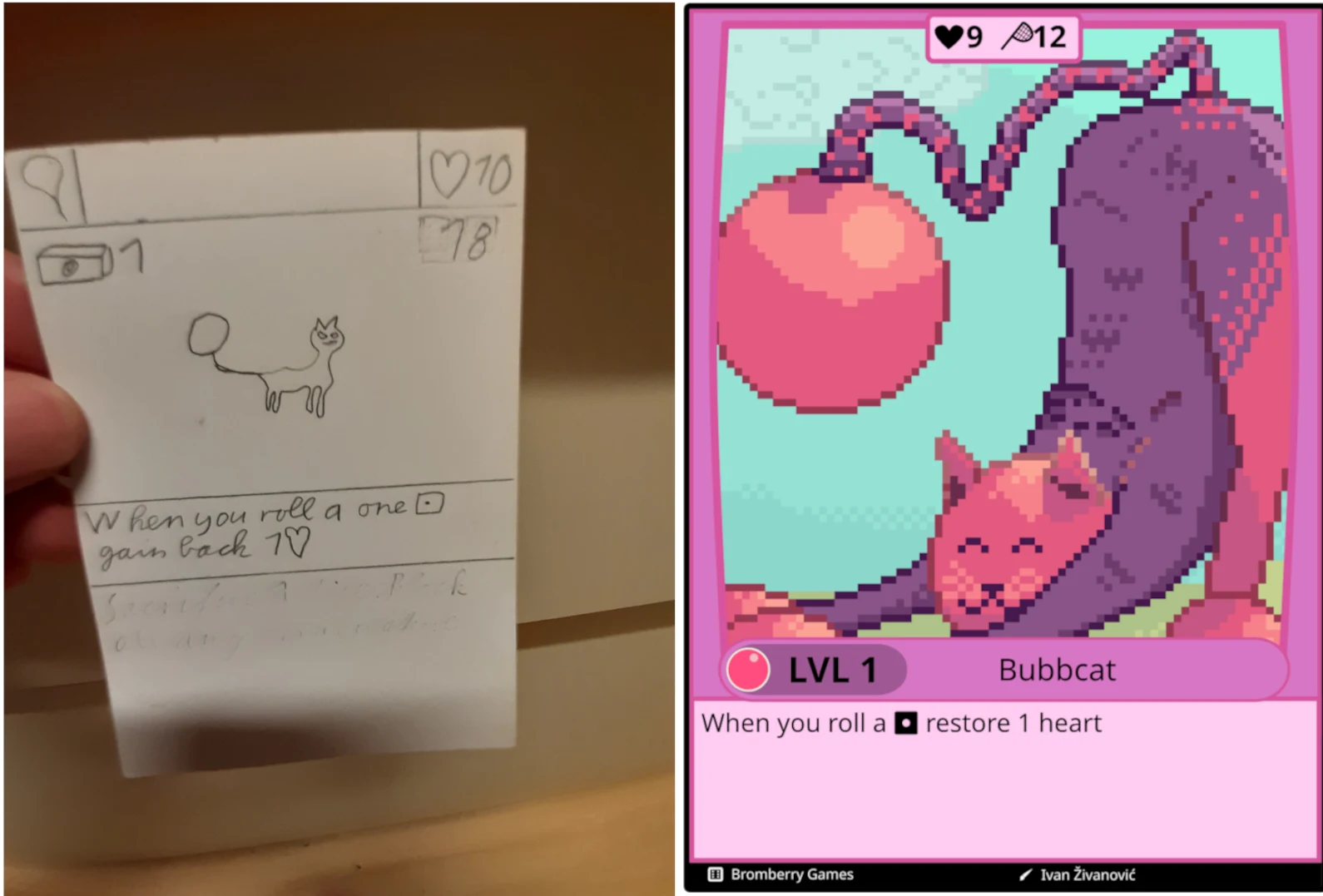
Overall, it's much easier to read and understand what's going on. The die icon is for readability, and while there is a case to be made that symbols actually increase cognitive load because they have to be learned, this one literally represents what a player sees, so it may even increase processing speed.
3 Oct 2023
Zvery · Woox →
I decided to pixel the Zvery from the lower levels upward. I probably should have done that from the get go. Why? Because during playtesting the beginning should be the most enjoyable so that the players want to continue playing. The difference between a card having even a bad art work and no artwork at all is indescribable. Currently, a lot of the fun is missing because the lower level cards often don't have artwork. Why didn't I do it sooner? Well, mostly because I got an idea and just started pixeling and often they just didn't look like level 1 or 2 Zvery. Lesson learned. Here's Woox:
8 Jan 2023
Examples of how I used Research in my projects
Studying games, design literature, or subject matter to inform my designs.
Druid's Haven · Researching tower defense before designing one →
Since I had only played a few tower defense games before starting Druid's Haven, it seemed useful to get to know the genre by playing a few games and sharing the most important takeaways with the team. You can check the document by clicking here.
It was definitely useful to get a breadth of ideas and get out of our preconceived ideas of what tower defense was. We started off with The Last Spire's stationary tower and ended up with an ecosystem growing outward from a starting point.
8 Jul 2026
Druid's Haven · Researching tower defense before designing one →
While researching tower defense games for Druid's Haven, I was also reading IGDA's Environmental Game Design Playbook to learn more about communicating pro-environmental messages through games. The first part is about psychology, so I was familiar with most of the theories, but it was very useful to see them presented in a games context. Especially the game examples listed for every tactic.
The book, for me personally, became a cornerstone for the design, i.e. how we could teach something about our environment while also empowering the player to act on it.
Specifically, basing it on the real world (creating environmental knowledge) and giving the player real world analogues to deal with it (creating environmental self-efficacy). For example, an apartment building is generating heat that hurts the plants around it, so giving the player the ability to put green walls on them which reduce heat in and around the building.
Unfortunately, we ran out of time before implementing that idea, but doing a lot of research helped me form a strong vision for the game and stay passionate throughout development.
8 Jul 2026
Inkvestigations · Research and narrative design for Forced Farewell →
Full spoilers ahead for Forced Farewell.
I had the outline of what would happen, but not when and where. It was an abduction story with the twist that the kid simply ran away because he hated his family but staged a crime to buy time. So far so good, but this is a story that could happen anywhere any time.I chose the time in which the original Sherlock Holmes was set, but specifically 1889 because that's at the tail end of the decade where steam boats...picked up steam. That meant fares to America were lower and accessible and a renegade kid might get on board. Because the story required parents who had the means to be ransomed as well as a kid who would need to conceive of such an idea, I chose a landed family.
Now I had who and when, which drastically narrowed down the where. I simply researched where the cheapest fares for ships going to America were at that time. Then looked to the outskirts of those great ports to find where a noble family might live. I ended up around Romsey, in spitting distance of Southampton which had become the dominant port at the time.
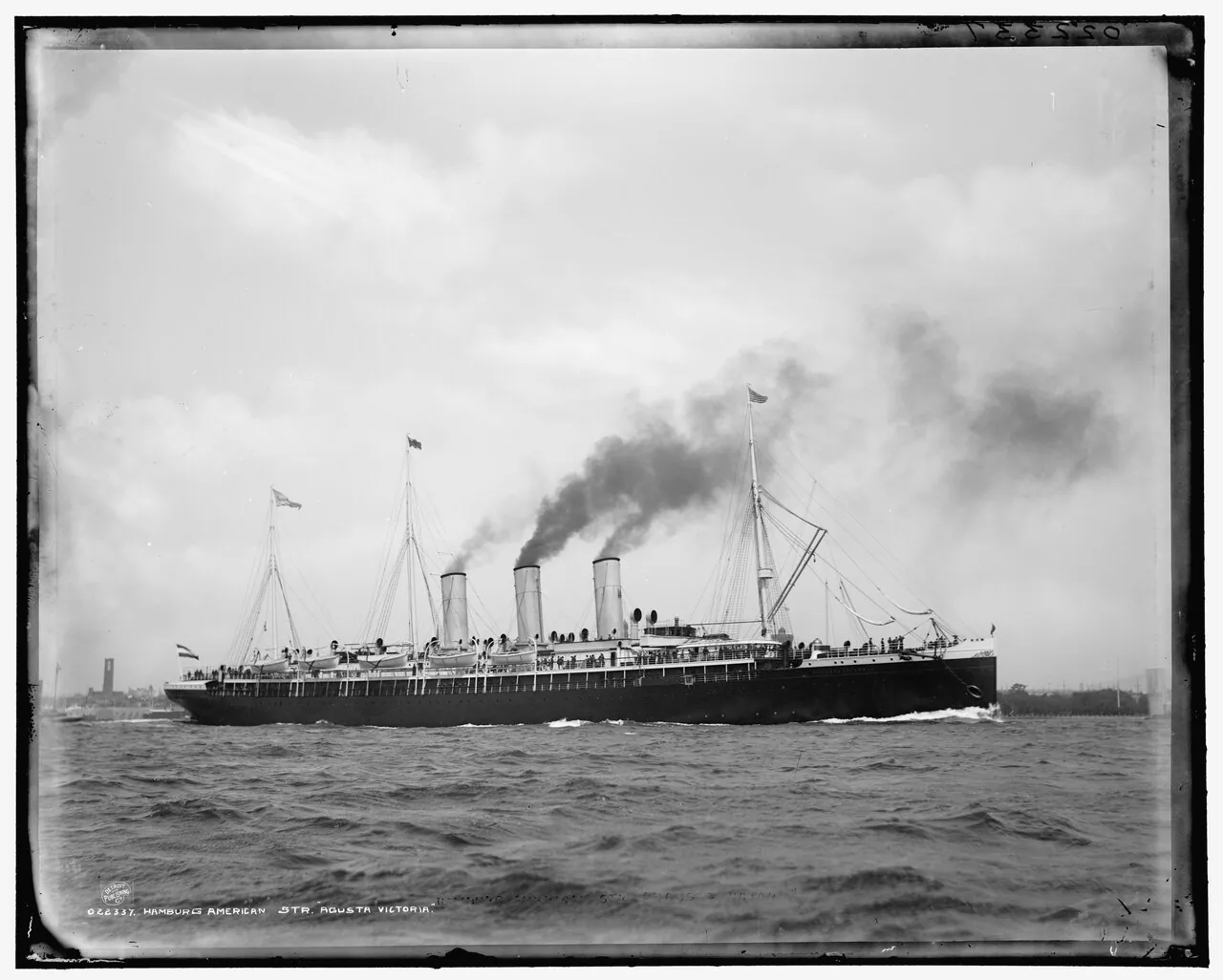
With the major constraints now set, I looked at mansions where these lords lived and reasoned about how a kid might run away since they were usually in the middle of nowhere. What would he know, what would he pack, where would he go? And how could you figure it out and find him?
6 Feb 2024
Inkvestigations · How we designed mechanics to support the narrative →
Apart from watching 600 episodes of Case Closed as a child, and watching the odd mystery movie, I was by no means a mystery expert. So I started seriously diving into the genre across all media (books, movies, shows, anime, podcasts, etc), while also reading breakdowns of the genre, such as the CliffsNotes on Detective in Fiction (I like to start small).
I wanted to really understand what made those stories so popular. My conclusion is that mystery is less a genre and more of a device for engagement. We humans experience something called the curiosity gap, a discomfort that motivates us to close the gap between what we know and what we want to know. All great stories will make us ask a question often: why? what? how? And these single-word questions can enthrall us for several hours.
In contrast to that grandeur, our stories have to ask questions that seem immediate and solvable. A man has died. There were four people present. Some really didn't like him. Who did it? Go. Because a player can ask the chief anything, it is all the more important to limit the scenarios' in scope.
19 Jan 2024
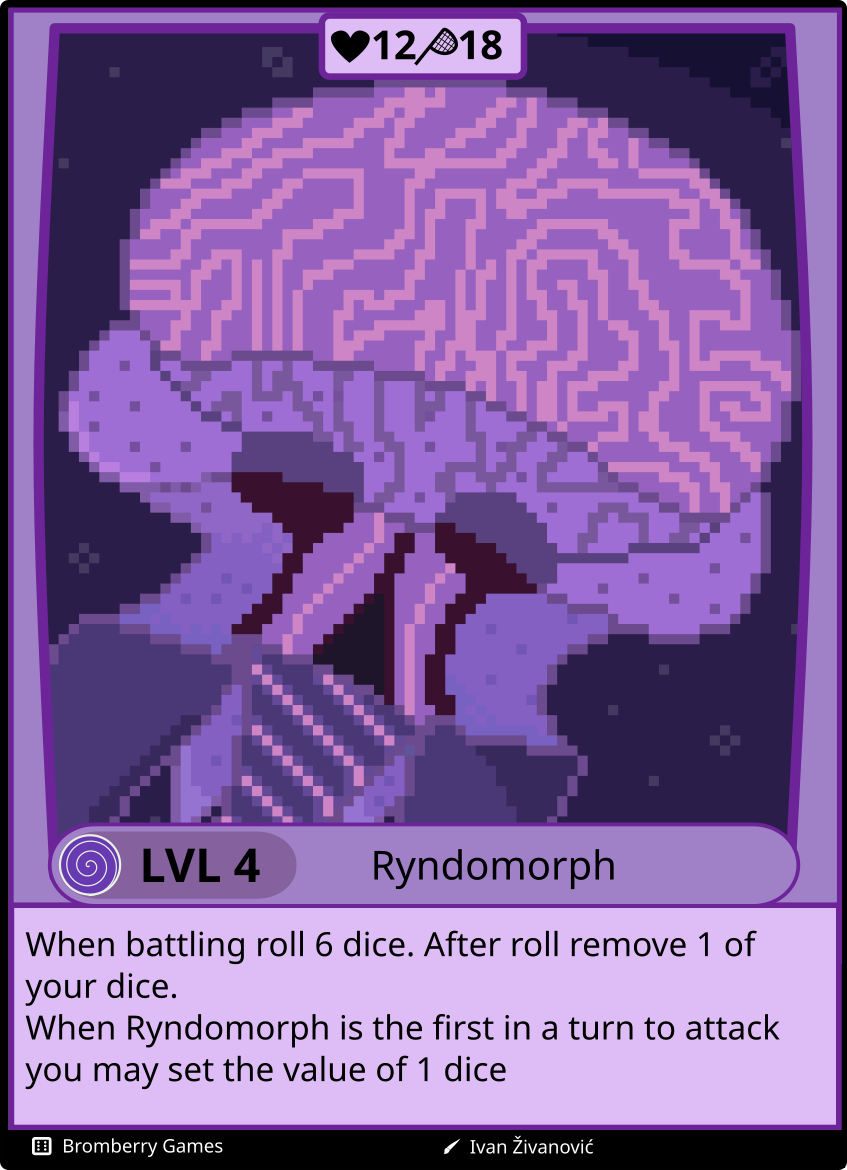
Zvery · Ryndomorph →
Today I made a void creature. I wanted it to be like a space jellyfish. So this time I heeded (head?) my own advice and made some sketches before starting to pixel it out:
I was looking at some pictures of jellyfish and now I get why they are so often inspire alien designs. They are really interesting, and one of the references I used kinda turned out like a skull. As you can guess and see from my sketches, I basically fixated on that idea, and I liked some of the sketches so I tried to make that.

13 Dec 2022
Examples of how I used Design documentation in my projects
Writing the design documents, specs and style guides that a team works from.
Druid's Haven · Design of Druid's Haven →
As part of the first sprint, we had to create a Design Document (which you can check out here). The game changed a lot, of course, because we had to create this document even before starting to prototype, but the original loop of "plant, survive, grow" remains in the game.
This was the first time that I wrote a design document that would be the source for a whole team (instead of personal use), and it was a very educational experience trying to bring everyone on the same page.
17 Jul 2026
Druid's Haven · Researching tower defense before designing one →
Since I had only played a few tower defense games before starting Druid's Haven, it seemed useful to get to know the genre by playing a few games and sharing the most important takeaways with the team. You can check the document by clicking here.
It was definitely useful to get a breadth of ideas and get out of our preconceived ideas of what tower defense was. We started off with The Last Spire's stationary tower and ended up with an ecosystem growing outward from a starting point.
8 Jul 2026
Oh, the French! · A style guide for a Twine game →
My solution to inconsistent prose in Oh, the French! was a style guide. It was written so that I would have an "objective" reference against which to compare my writing. For example:
- Descriptions cannot contain colors, only black, white, grey, or none
- Characters must be ungendered
- Nouns should always use the definite article (the house, the street, etc.)
So as I was writing, sentences like the following would come up: "The bleak buildings cast a black shadow onto the street." This is something I'd check ten times without noticing the indefinite article. Corrected: "The bleak buildings cast the black shadow onto the street."
Obviously, since this was for personal use, I didn't have to add a lot of clarifications, but it saved me so much time and caught so many inconsistencies that I'll make it a point to have one for every game. This isn't a particular burden for me as I document everything anyway.
30 Jan 2025
Examples of how I used Collaboration in my projects
Working in a team: aligning people on a vision, sharing work, communicating decisions, providing and receiving feedback, offering help where needed.
Druid's Haven · Design of Druid's Haven →
As part of the first sprint, we had to create a Design Document (which you can check out here). The game changed a lot, of course, because we had to create this document even before starting to prototype, but the original loop of "plant, survive, grow" remains in the game.
This was the first time that I wrote a design document that would be the source for a whole team (instead of personal use), and it was a very educational experience trying to bring everyone on the same page.
17 Jul 2026
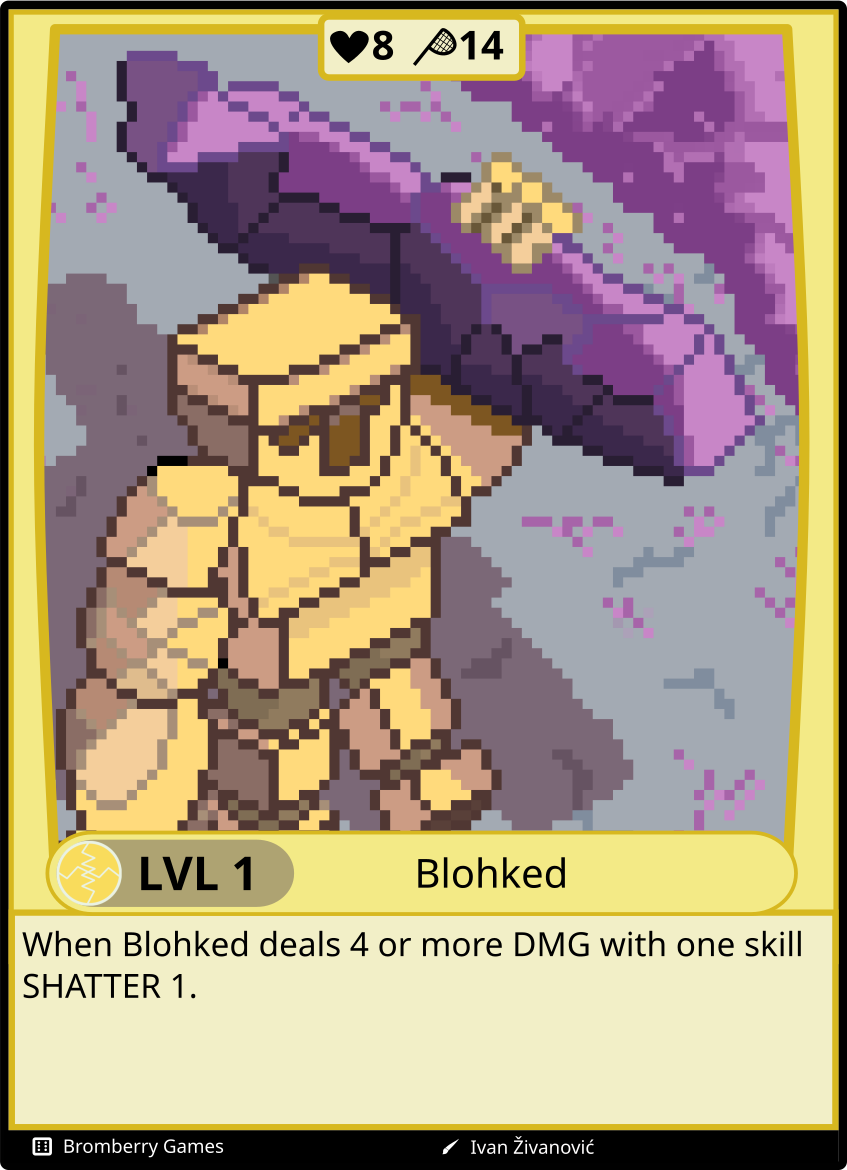
Zvery · Blohked →

For Blohked, I tried to make it a little in perspective because Simon rightly pointed out that all of them are either front-facing or 90 degrees from the side. EEeeeeveryone's a critic these days. But yea, I just had to try and it took me quite a long time, to be honest. The design is pretty basic, but I wanted to get into this perspective stuff asap. Anyway, let me know what you think.
19 Dec 2022
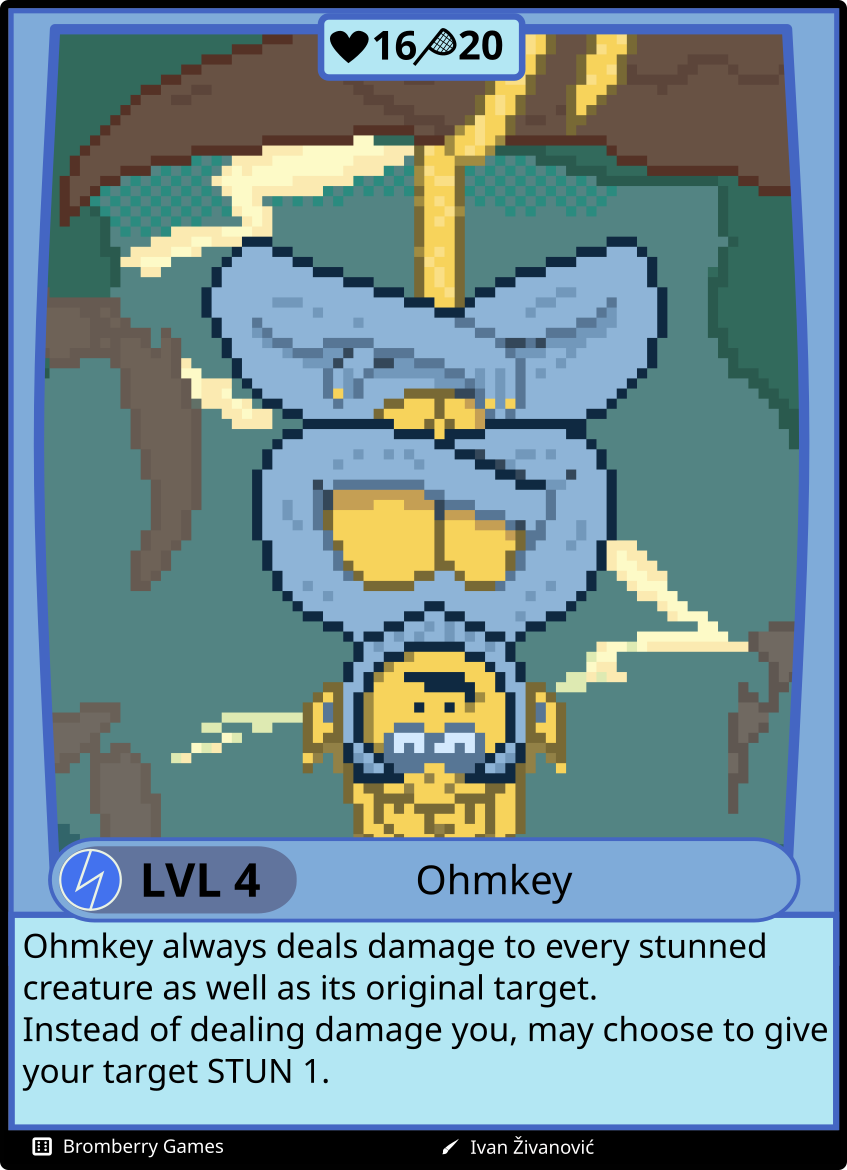
Zvery · Ohmkey →
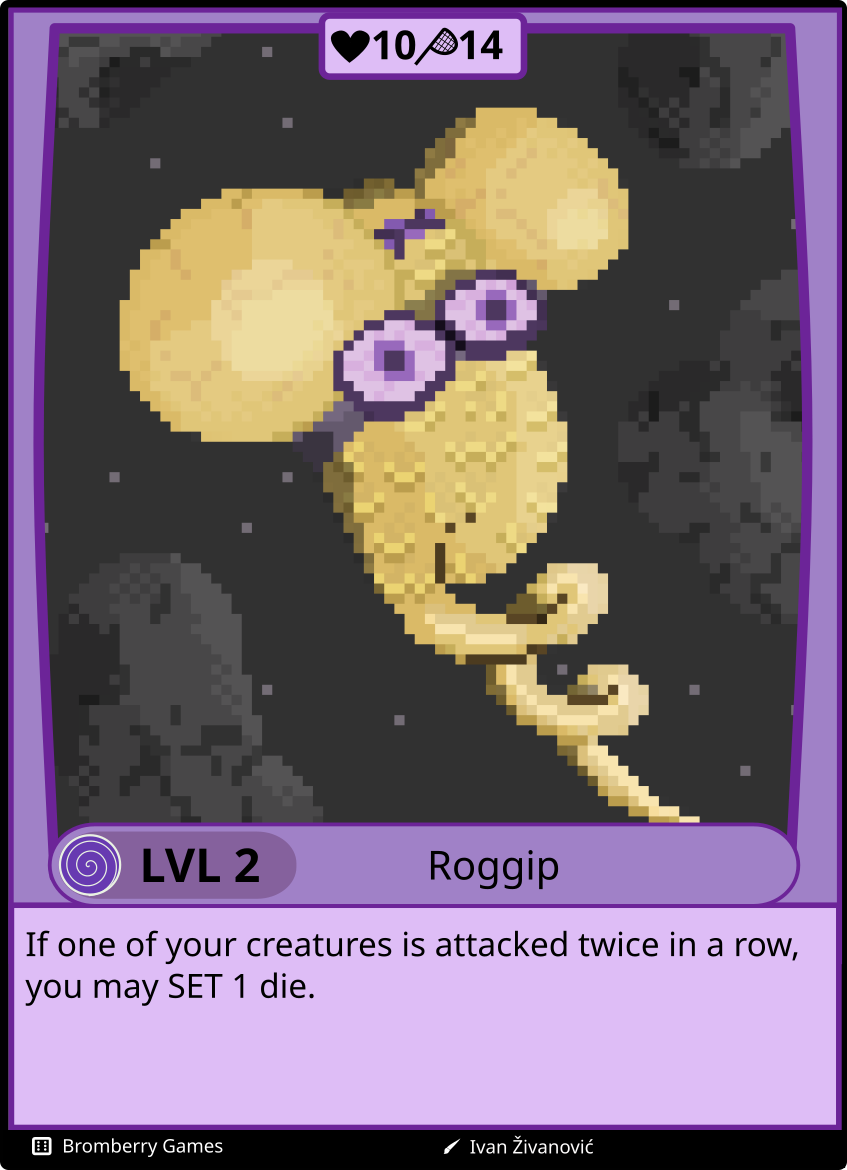
Simon gave me feedback that there was nothing he could connect with Ryndomorph. I agree, Ryndomorph simply didn't have a well-defined vibe, or personality. So today I wanted to push it a bit. I tried creating a powerful and confident Zvery.
Here's Ohmkey:

It was definitely a challenge with the pose and everything. I also tried my hand at a bit more explicit story-telling. I even used more than the usual amount of references.
14 Dec 2022
Examples of how I used Art direction in my projects
Choosing a look and sound for a game, and keeping every asset consistent with it.
Yokai Madness · Making more with less →
For Yokai Madness I had no time to make art. Up till then, I had always made all the assets myself, and while it consumes a lot of time, one does have complete control over the outcome. The challenge with using assets is making them fit together into a cohesive whole.
I searched until I had enough similar material, so I ended up using a few different asset packs, slightly editing them in Aseprite to make them match. It turned out to be a samurai demon-hunter inspired game. I completed the set with a CRT shader from the Godot asset store to hide any slight inconsistencies between the assets. Based on that samurai vibe, I found a song that fit both the aesthetics and the gameplay.
The game ranked 9th for audio and 25th for visuals out of the hundred submissions, so I think it was a success.
29 Nov 2025
Examples of how I used Graphic design in my projects
Laying out information so it reads at a glance using hierarchy, contrast, and gestalt principles.
Inkvestigations · Web design rework →
I decided to rework the page. Created the wireframes in Penpot to reflect some things I've learned and to make it look nicer.
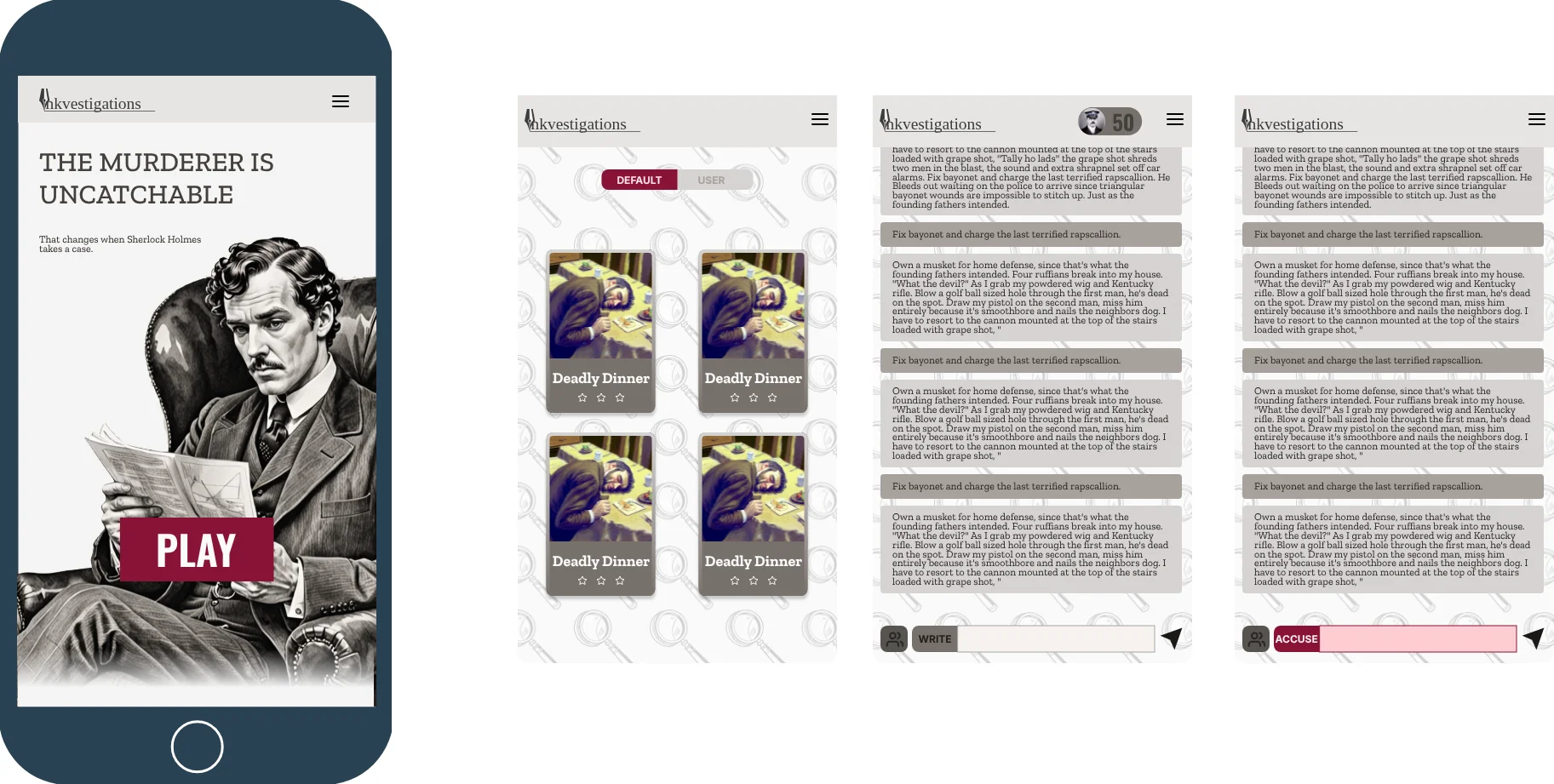
I think a black and white look with the burgundy drawing attention looks cleaner than the muddy colors we currently have.
19 Aug 2024
Zvery · Designing the cards of Zvery →
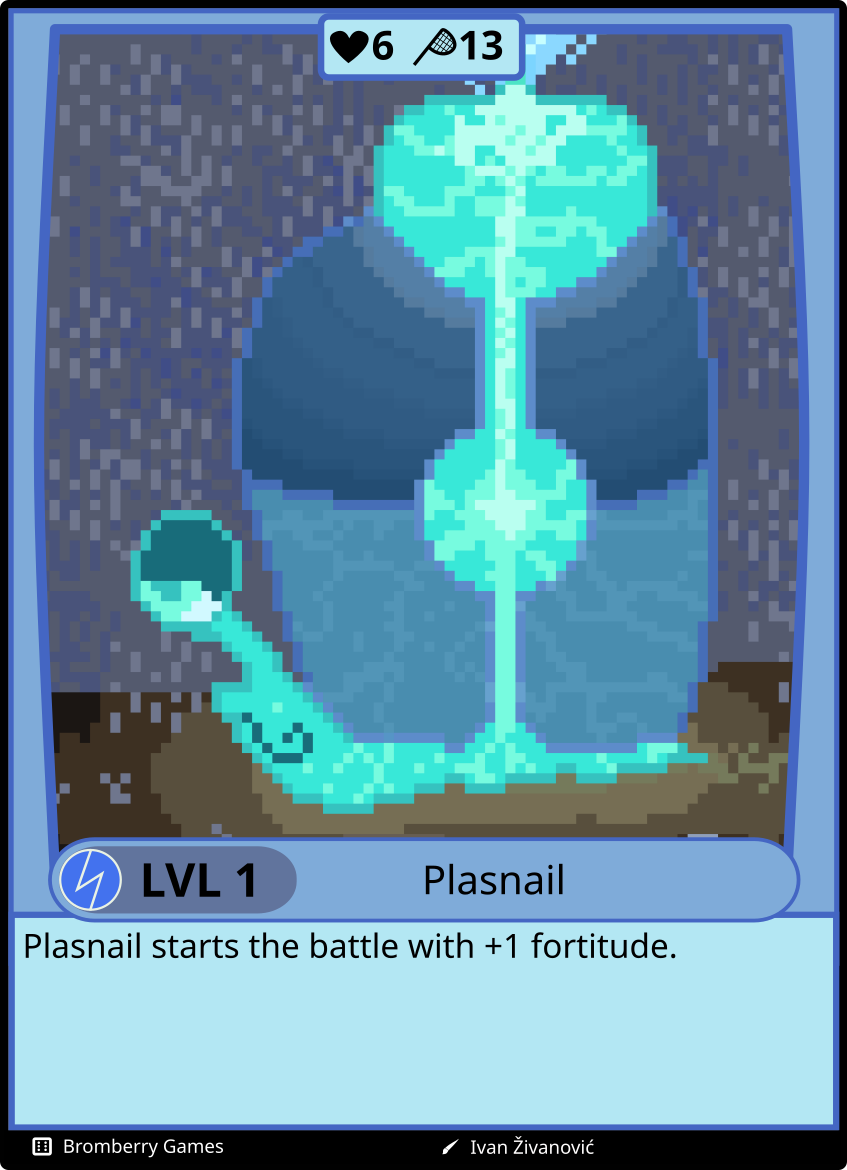
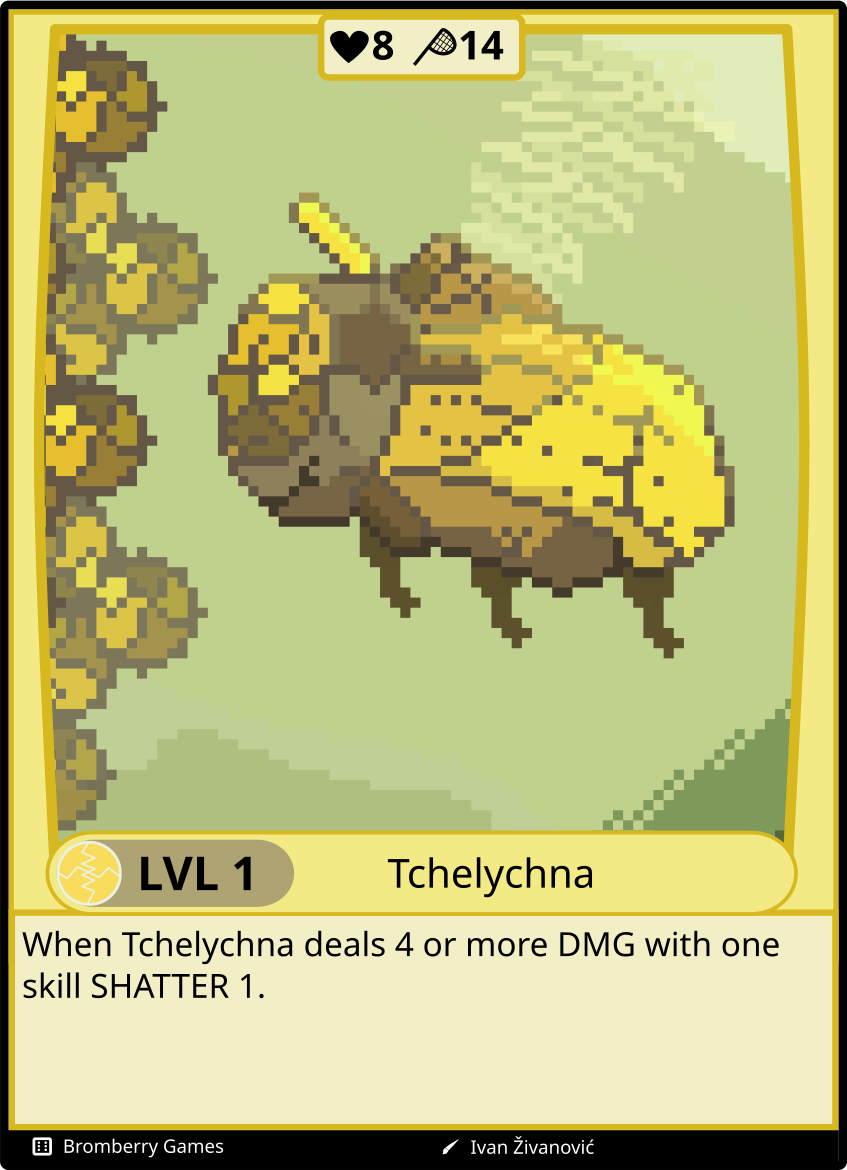
Every Zvery card type looks different. Form follows function, of course, but apart from allowing players to quickly distinguish the card type, it also serves a second purpose. Namely, adaptations and mutations are meant to be tucked behind the creature cards.
As you progress through the game, and as rewards get bigger, you start collecting a lot of cards. Soon, they're taking a lot of space and become overwhelming and one Zvery's cards may spread over to another's. To save a little space and to reduce the cognitive load of searching for the card you need as well as making card ownership more concrete, I designed the cards to be placed behind the Zvery.
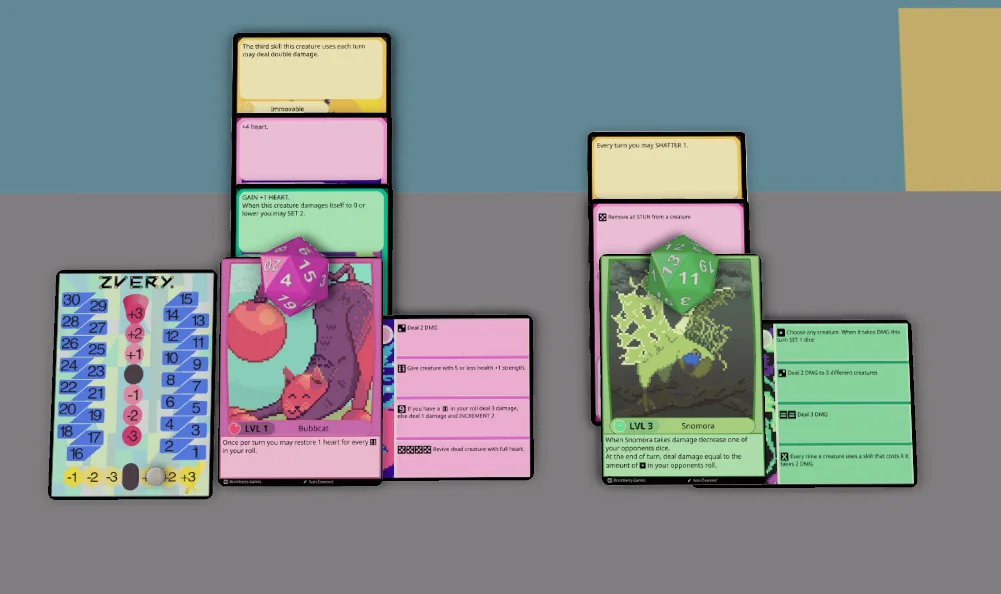
After a few turns, your board might look like this. Cleaner than if the cards were completely fanned out. Still, there's a lot of room to improve the design of the cards. Right now, they look pretty flat, some texture like gradients or other effects on the backgrounds would help make them more interesting. However, the design is partly a result from attempting to make it printable at home.
3 Oct 2023